

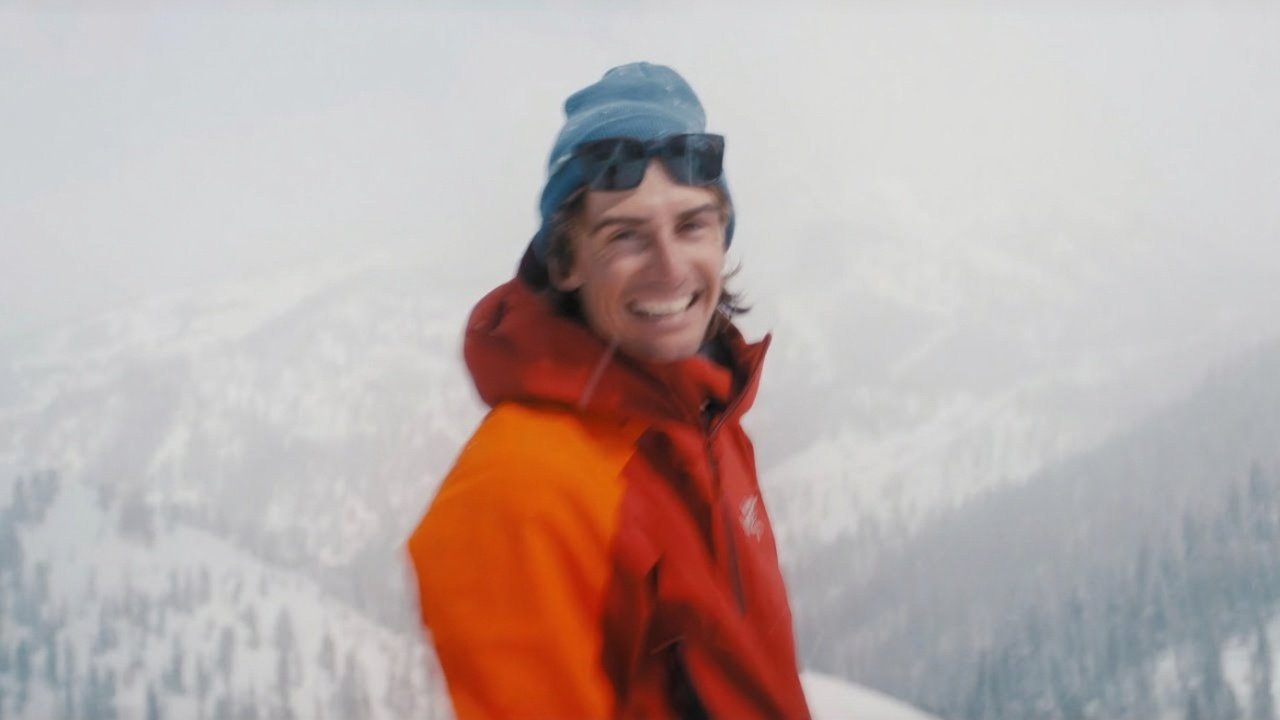
The Tragic Fall: Michael Gardner’s Climbing Accident and Enduring Legacy
The North Face of Jannu East rises nearly 8,000 feet from its base, a vertical fortress of ice and rock that had never felt human footsteps. On October 7, 2024, this imposing wall in Nepal’s remote Kangchenjunga region claimed the life of Michael Gardner, one of America’s most accomplished alpinists, during what would become his final climbing adventure.
At just 32 years old, Gardner had already redefined what was possible in high-altitude mountaineering. The Colorado native was known not for ego or reckless ambition, but for his humble approach to some of the world’s most challenging climbs. His philosophy, dubbed “Mapache Style”—eating simple, living light, and pushing boundaries ethically—had made him a legend among his peers and sponsors alike.
Gardner’s death sent shockwaves through the climbing community, not just because of his youth and talent, but because of who he was as a person. Those who knew him described a man whose infectious joy and deep humility made him “everyone’s favorite person,” someone who approached the mountains with both reverence and an unshakeable sense of wonder.
This is the story of a climber whose brief but brilliant career illuminated new possibilities in alpinism, whose tragic end echoed a family history of mountain loss, and whose legacy continues to inspire climbers around the world to “keep it tight and spread the light.”
Early Life: From Family Roots to Personal Tragedy
Michael Gardner’s path to the mountains began in Ridgway, Colorado, where he grew up surrounded by some of North America’s most spectacular peaks. His father, George Gardner, was a renowned mountain guide whose passion for climbing shaped the family’s entire way of life. From an early age, Michael was exposed not just to the technical aspects of mountaineering, but to its deeper philosophy of respect for the natural world.
The young Gardner was a natural athlete with diverse interests. He started skateboarding in kindergarten and excelled at skiing, often combining his love for both snow and wheels in creative ways. Friends remember him as someone who refused to be defined by any single pursuit, embodying a free-spirited approach that would later characterize his climbing style.
However, tragedy struck when Michael was just 16 years old. In 2008, his father died while soloing the Grand Teton, a loss that profoundly shaped Michael’s relationship with the mountains. Rather than driving him away from climbing, this heartbreak seemed to deepen his understanding of the mountains’ dual nature—their capacity for both transcendent joy and devastating loss.
“I don’t have a really clear, well-thought-out answer … why I go to the mountains when there’s so much hurt and tragedy there for me. Yet there’s so much joy, and the answer lies somewhere in the middle of these paradoxes,” Gardner would later reflect in a podcast interview.
This tragedy reset his entire approach to mountaineering. Despite his youth, Michael began working as a guide himself, channeling his father’s legacy while developing his own distinct philosophy. The experience taught him that the mountains demanded both respect and humility—lessons that would guide every subsequent climb.
Rising to Prominence: Achievements That Redefined Alpinism
Gardner’s climbing career was marked by a series of groundbreaking ascents that showcased his fast-and-light philosophy. Working primarily with his longtime partner Sam Hennessey, Gardner developed a reputation for tackling some of North America’s most challenging routes in record time, often wearing ski boots to enable epic descents.
His achievements on Denali, in particular, established him as one of the world’s leading alpinists:
| Achievement | Details | Year | Partners |
| Slovak Direct on Denali | Speed record: 17 hours, 10 minutes (AI6- M8-, 9,000′) | 2022 | Sam Hennessey, Rob Smith |
| Light Traveler on Denali | Second ascent and fastest among Denali’s toughest routes (M7 WI 6) | 2018 | Sam Hennessey |
| Anubis on Denali’s Isis Face | New route (Alaska Grade 6: AI5 M6, 6,900′) in 18 hours | 2021 | Sam Hennessey |
| One Way Out on Mt. Hunter | New route (AI6 M6+ R, 2,000m) | 2024 | Sam Hennessey, Rob Smith |
| First ski descent of Denali’s Northwest Buttress | Via Cassin Ridge (5.8 AI 4; 2,400m) in 64 hours | N/A | Adam Fabrikant |
What set Gardner apart was not just his technical skill, but his approach to funding and executing expeditions. He received support from the American Alpine Club’s Cutting Edge Grant, which recognizes innovative climbing projects. Rather than seeking corporate sponsorship for ego-driven objectives, Gardner focused on routes that pushed the boundaries of what was technically possible while maintaining the highest ethical standards.
His “Mapache Style” philosophy—”Eat trash, live fast. Mapache for life”—became something of a mantra in the climbing community. It represented a scrappy, minimalist approach to alpinism that prioritized skill and creativity over expensive equipment or elaborate logistics.
“All that matters is that we climbed high, we climbed hard and we came home,” Gardner said after completing “One Way Out” on Mt. Hunter in 2024, his final major first ascent.
Those who climbed with Gardner consistently praised his ability to remain calm under pressure and his infectious enthusiasm for the craft. He had a unique gift for making extremely technical climbing look effortless, often completing routes that took other teams multiple days in a matter of hours.
The Fateful Expedition: Targeting Jannu East’s North Face
By 2024, Gardner had set his sights on one of the world’s most challenging unclimbed faces: the 2,400-meter North Face of Jannu East. Located in Nepal’s remote Kangchenjunga region, this 7,468-meter peak (the world’s 32nd highest) represented the kind of objective that had always drawn Gardner—technically demanding, aesthetically beautiful, and completely unclimbed.
This wasn’t Gardner’s first attempt on Jannu East. He and Hennessey had tried the route twice before, in 2019/2022 and again in 2023, but had been turned back by dangerous icefall conditions and poor weather. The 2024 expedition, funded by another American Alpine Club Cutting Edge Grant, represented what they hoped would be their breakthrough attempt.
The plan was quintessentially Gardner: climb the massive face in pure alpine style, without supplemental oxygen, fixed camps, or external support. They would carry everything they needed on their backs and commit to the route completely, knowing that retreat would be difficult once they were committed to the upper face.
Adding an element of international drama to the expedition, a French team consisting of Benjamin Vedrines, Leo Billon, and Nicolas Jean was simultaneously attempting a nearby route on the same mountain. The parallel expeditions highlighted the global significance of Jannu East as one of the world’s last great unclimbed challenges.
Also Read:
Travis Ruffin’s Tragic Car Accident: Stay Updated
Olivia Knighton Boating Accident
Gardner and Hennessey approached the climb with their typical meticulous preparation and measured optimism. They had studied the route extensively, analyzed weather patterns, and refined their equipment selection to minimize weight while maximizing safety margins. Everything suggested this would be their year to finally complete the route that had become something of an obsession.
The Accident: What Happened on October 7, 2024
The details of what happened on October 7, 2024, remain tragically unclear. Gardner and Hennessey had been climbing the North Face and were in the process of descending when disaster struck. During what should have been a routine part of their descent, Gardner suffered a fatal fall that sent him plummeting down the face.
Hennessey, who witnessed the accident, was unable to arrest Gardner’s fall or provide immediate assistance due to the extreme terrain and technical difficulty of their position on the route. The exact cause of the fall—whether equipment failure, rockfall, or human error—has never been definitively determined.
What is known is that Gardner’s fall was unsurvivable. The massive vertical relief of Jannu East’s North Face, combined with the technical nature of the terrain, meant that any significant fall would likely be fatal. For Hennessey, the immediate challenge shifted from completing the climb to surviving his own descent and somehow getting word to the outside world about his partner’s death.
The tragedy took on additional poignancy given Gardner’s own words about risk in the mountains, spoken years earlier: “An indescribable awareness of place and peace takes hold. On the other hand, there are consequences.” He had always understood that his style of climbing carried inherent risks, but had approached those risks with the same measured thoughtfulness he brought to every aspect of his climbing.
Gardner’s death also echoed his father’s fate 16 years earlier, creating a heartbreaking parallel that wasn’t lost on those who knew the family’s history. The mountains that had given both father and son such joy had ultimately claimed both their lives.
Search and Aftermath: Efforts to Find Closure
Following Gardner’s fall, Hennessey faced the grim task of descending alone from high on Jannu East’s North Face. In a remarkable display of composure under devastating circumstances, he managed to link up with the French team for the final 700 meters of rappelling, allowing him to reach base camp safely.
Once word of the accident reached base camp, immediate search efforts began. Both Hennessey and the French climbers conducted ground searches of the area below the North Face where Gardner had fallen. They also deployed drone technology to scan areas that would have been impossible to reach on foot.
Despite extensive searching, only items of Gardner’s clothing and climbing equipment were recovered from the bottom of the face. His body was never found, likely due to the extreme terrain and the possibility that it had fallen into one of the many crevasses or icefalls at the base of the wall.
The inability to recover Gardner’s body added an additional layer of grief for his family and friends. His mother Colleen and sister Megan faced not only the loss of their beloved Michael, but also the reality that they would never be able to bring him home for a traditional burial.
For the climbing community, the search efforts highlighted both the tight-knit nature of high-altitude mountaineering—where climbers from different countries will risk their own safety to help their peers—and the harsh realities of accidents in remote mountain ranges. The fact that experienced climbers with modern technology were unable to recover Gardner’s body underscored just how unforgiving the environment where he died truly was.
Tributes and Remembrances: Honoring a Humble Giant
The news of Gardner’s death prompted an outpouring of tributes from across the climbing world. His sponsors, partners, and friends all emphasized the same qualities: his humility, his infectious enthusiasm, and his complete lack of ego despite his remarkable achievements.
“Mike’s legacy lives on through all the people he touched and his soul rests easy in the land of the giants,” said Justin Sweeny, Arc’teryx Athlete Team Manager. The outdoor gear company, which had sponsored Gardner, noted that his approach to climbing perfectly embodied their values of pushing limits while maintaining respect for the mountains.
Perhaps the most poignant tribute came from Elena Hight, the Olympic snowboarder who had been Gardner’s partner. “Thank you for choosing me to be yours. Thank you for showing me what it is supposed to feel like,” she wrote, capturing the personal loss felt by those closest to him.
Friends consistently described Gardner as “curious and loving” with “no ego to mention.” This absence of ego, particularly remarkable in a sport where self-promotion often overshadows achievement, was perhaps Gardner’s most defining characteristic. He climbed not to build a personal brand or achieve fame, but simply because he loved being in the mountains.
His motto—”Keep it tight and spread the light”—became a rallying cry in the tributes that followed his death. The phrase encapsulated both his technical approach to climbing (keeping movements precise and efficient) and his philosophy of sharing joy and inspiration with others.
The climbing media, including publications like Alpinist Magazine and Climbing Magazine, dedicated extensive coverage to Gardner’s life and achievements. These retrospectives helped introduce his story to climbers who might not have been familiar with his work, ensuring that his influence would extend beyond his immediate circle of partners and friends.
Redefining Fast-and-Light Alpinism
Gardner’s approach to mountaineering represented a significant evolution in modern alpinism. At a time when many high-profile climbs relied heavily on fixed ropes, supplemental oxygen, and large support teams, Gardner demonstrated that technical routes could be completed with minimal equipment and maximum skill.
His speed records on routes like the Slovak Direct weren’t just about climbing faster—they represented a fundamental philosophy about how to engage with the mountains. By moving quickly and efficiently, Gardner and his partners minimized their exposure to objective hazards like avalanches and rockfall, actually making their climbs safer despite their apparent boldness.
This approach required an extraordinary level of fitness, technical skill, and mental preparation. Gardner spent months training for each major objective, studying route descriptions and photos, analyzing weather patterns, and refining his equipment selection. His “fast and light” style was actually the product of extensive preparation and careful calculation.
The influence of Gardner’s methods can already be seen in the climbing of younger alpinists who have adopted similar approaches to major mountain objectives. His demonstration that world-class routes could be completed with minimal environmental impact and maximum style has helped establish new standards for ethical climbing.
Mentoring the Next Generation
Despite his youth, Gardner had already begun passing on his knowledge to the next generation of climbers. His work as a mountain guide, which began when he was still a teenager following his father’s death, gave him extensive experience in teaching others how to move safely in the mountains.
Those who learned from Gardner consistently praised his patience and ability to break down complex technical skills into understandable components. He had a gift for helping other climbers understand not just the mechanics of difficult techniques, but the underlying principles that made them effective.
His willingness to share knowledge extended beyond formal guiding relationships. Gardner was known for taking time to mentor younger climbers he met on expeditions, offering advice on everything from training regimens to route selection. This generous spirit helped create a network of climbers who carry forward his approaches and values.
The climbing community’s response to his death has included commitments to continue this mentoring tradition. Several established climbers have spoken about their intention to honor Gardner’s memory by being more generous with their own knowledge and experience, helping ensure that his approach to sharing climbing wisdom continues.
The Paradox of Risk and Joy
Throughout his career, Gardner wrestled with the fundamental paradox that had shaped his life since his father’s death: how to find joy in an activity that carries the constant potential for tragedy. His thoughtful approach to this tension set him apart from climbers who either ignored risk entirely or became paralyzed by it.
Gardner’s solution was to accept risk as an inherent part of climbing while working systematically to minimize it through preparation, skill development, and careful decision-making. He understood that the goal wasn’t to eliminate risk—which would be impossible—but to ensure that the risks taken were proportional to the rewards gained.
This philosophy extended beyond technical safety measures to include ethical considerations about environmental impact and respect for local communities. Gardner consistently chose objectives and methods that aligned with his values, even when more expedient approaches were available.
His ability to maintain joy and wonder despite his awareness of climbing’s dangers served as an inspiration to other climbers struggling with similar questions. Gardner demonstrated that it was possible to pursue bold objectives without losing sight of why climbing mattered in the first place.
Looking Forward: Preserving Gardner’s Legacy
The American Alpine Club has announced that Gardner’s final adventures, including the Jannu East expedition, will be featured in the 2025 American Alpine Journal. These articles will help preserve the technical details of his climbs while also capturing the spirit and philosophy that made his approach unique.
Beyond formal documentation, Gardner’s influence continues through the climbers he inspired and mentored. His emphasis on ethical climbing practices, minimalist approaches, and genuine humility has already begun to influence how younger climbers think about their own objectives and methods.
Several climbing organizations have discussed establishing grants or programs in Gardner’s name, focused on supporting the kind of innovative, ethical climbing he represented. These initiatives would help ensure that future generations of climbers have access to the resources needed to pursue bold objectives responsibly.
The outdoor gear industry has also begun to reflect on Gardner’s example, with some companies reconsidering how they support athletes and what values they want to promote through their sponsorship programs. Gardner’s focus on substance over style has highlighted the importance of supporting climbers who represent the best aspects of mountain culture.
Honoring a Life Cut Short
Michael Gardner’s death at 32 represents not just the loss of an exceptional climber, but the end of a life that embodied the best aspects of mountain culture. His combination of technical excellence, ethical behavior, and genuine humility created a model for how to engage with the mountains that transcends any individual achievement.
The tragedy of his death is compounded by the sense of what might have been—the routes he might have climbed, the climbers he might have mentored, and the continued evolution of his already remarkable approach to alpinism. Yet his influence on the climbing community has already begun to extend far beyond what he accomplished in his brief career.
Gardner’s story serves as both inspiration and cautionary tale for those who choose to pursue their passions in dangerous places. His willingness to accept risk in pursuit of beauty and challenge speaks to something fundamental about the human spirit, while his death reminds us that the mountains are ultimately indifferent to our ambitions.
For climbers and non-climbers alike, Gardner’s life offers lessons about pursuing excellence with humility, finding joy despite adversity, and sharing knowledge generously with others. His motto—”Keep it tight and spread the light”—remains as relevant today as when he first spoke those words.
A Legacy That Endures
As the climbing community continues to process the loss of Michael Gardner, his influence becomes increasingly clear. The routes he pioneered continue to challenge and inspire other climbers, while his ethical approach to alpinism has helped establish new standards for how to pursue bold objectives responsibly.
Perhaps most importantly, Gardner’s example demonstrates that the true measure of a climbing career isn’t found in any single achievement, but in the totality of how one chooses to engage with the mountains and the climbing community. By that standard, his brief but brilliant career stands as a monument to what’s possible when talent, ethics, and genuine love for the mountains converge.
The North Face of Jannu East remains unclimbed, its summit still awaiting the first human visitors. When that day eventually comes—as it surely will—those climbers will be following in the footsteps of Michael Gardner, whose sacrifice helped illuminate the path forward. His legacy will continue to inspire climbers to approach the mountains with the same combination of skill, humility, and joy that defined his all-too-brief time among the peaks he loved.
In a sport where ego and self-promotion often overshadow genuine achievement, Michael Gardner stood apart as someone who climbed simply because he loved being in the mountains. That love, and the example he set for others, ensures that his influence will extend far beyond any individual route or record. As climbers around the world continue to “keep it tight and spread the light,” Michael Gardner’s spirit lives on in every ethical ascent and every moment of wonder experienced in the high places of the earth.