
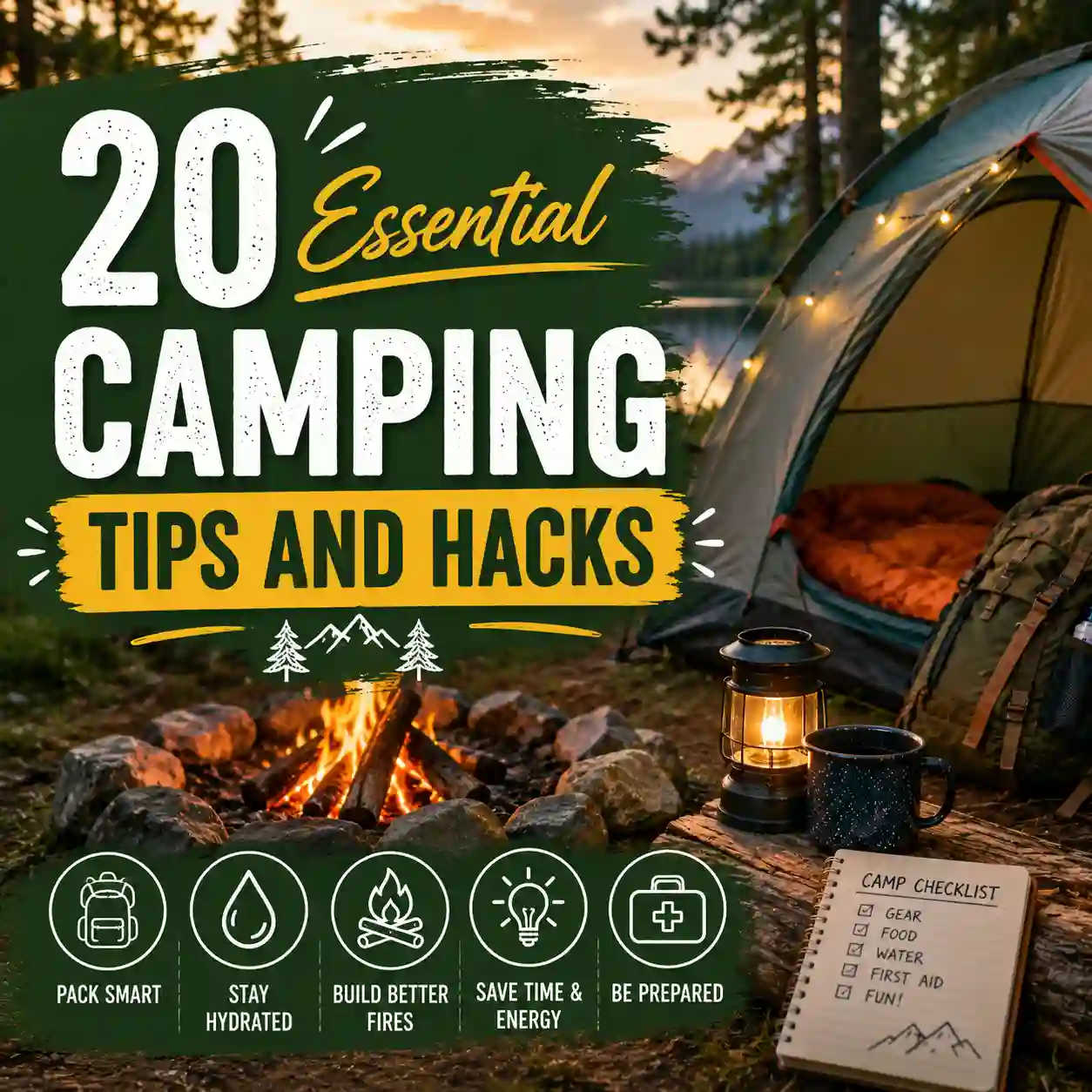
A Comprehensive Field Guide to Smarter, Safer, and More Comfortable Outdoor Adventures
Whether you are planning your first weekend car-camping trip or you are a seasoned backcountry traveler looking to sharpen your field craft, these twenty meticulously tested camping tips and hacks represent the accumulated wisdom of thousands of nights spent under the stars. From maximizing the thermal efficiency of your cooler to leveraging the natural pest-repelling properties of campfire sage, each technique has been evaluated for practicality, weight efficiency, and real-world effectiveness. Read on to transform your campsite from a site of mere survival into a sanctuary of outdoor mastery.
[kitchen] The Pre-Frozen Water Bottle Hack
Ditch the loose ice cubes and use frozen gallon jugs to keep your food cold and your thirst quenched.
One of the most frustrating aspects of multi-day camping trips is the inevitable ‘soup’ that forms at the bottom of your cooler. As traditional ice cubes melt, they submerge your food in lukewarm water, often ruining cardboard packaging and soggying up your vegetables. The hack? Pre-freeze several large water bottles or gallon jugs before you head out.
Why it works: A large block of ice has significantly less surface area than hundreds of tiny cubes, meaning it melts at a much slower rate. This provides a consistent thermal mass that keeps your cooler at a refrigerator-safe temperature for days longer than loose ice.
How to execute:
–
Use BPA-free, heavy-duty plastic bottles.
–
Leave about 2 inches of ‘headspace’ at the top of the bottle before freezing, as water expands when it turns to ice.
–
Position these bottles at the four corners of your cooler for even cooling.
As the ice eventually melts (which will take 2-3 days in a quality cooler), you are left with perfectly chilled, potable water to drink or cook with, saving you space in your gear layout. This eliminates the need to buy expensive, often dirty bags of ice at gas stations along the way.
[Safety] Sage Bundles for Natural Pest Control
Keep the mosquitoes at bay without the sticky chemicals by utilizing the natural properties of sage.
Mosquitoes can turn a peaceful evening by the campfire into a desperate battle for comfort. While DEET-based sprays are effective, they are often oily, smell strongly of chemicals, and can damage certain synthetic tent fabrics. A traditional and highly effective hack is adding a bundle of dried sage to your campfire.
Why it works: Sage contains natural oils that, when burned, release a scent that is pleasant to humans but highly repulsive to mosquitoes and many other flying insects. The smoke acts as a perimeter defense, keeping the immediate area around the fire clear of pests.
How to execute:
–
Source dried sage bundles (often sold as ‘smudge sticks’ or found in the spice aisle).
–
Place the bundle on the edge of the fire, not in the center, to ensure it smolders rather than incinerates instantly.
–
Repeat every 45-60 minutes for sustained protection.
This method is particularly useful for those with sensitive skin or families with young children who may react poorly to high-concentration chemical repellents. Plus, it adds a crisp, earthy aroma to your campsite that enhances the overall outdoor experience.
[Fire] The Vaseline-Cotton Ball Fire Starter
Ensure you can start a fire in damp conditions with this ultra-lightweight, waterproof tinder.
Starting a fire in the rain or after a heavy dew is a primary survival skill that every camper should master. Standard matches often fail in the wind, and damp wood requires a sustained flame to catch. Enter the Vaseline-coated cotton ball—a staple in any minimalist’s gear kit.
Why it works: Cotton is highly flammable, but it burns out quickly. Petroleum jelly (Vaseline) acts as a fuel source that allows the cotton to burn for several minutes rather than seconds. The jelly also creates a waterproof barrier, meaning even if your tinder gets wet, it will still ignite with a single spark.
How to execute:
–
Take 10-15 cotton balls and massage a generous amount of petroleum jelly into them.
–
Store them in an airtight container (like an old film canister or a pill bottle).
–
When ready, pull the cotton ball apart slightly to expose the dry fibers inside and light it with a ferro rod or lighter.
One single ball can burn for 3 to 5 minutes, providing plenty of time for your kindling to dry out and ignite. This is an essential safety hack that costs pennies but can be life-saving in cold, wet environments.
[Gear] Duct Tape Water Bottle Wrap
Save space in your pack by wrapping your emergency duct tape around your reusable water bottle.
Duct tape is the ‘Swiss Army Knife’ of repair tools—essential for fixing tent rips, leaking sleeping pads, or broken boot soles. However, carrying a full roll is bulky and unnecessary for a weekend trip. Instead, wrap several feet of tape around your hard-sided water bottle or a lighter.
Why it works: This utilizes ‘dead space’ on an item you are already carrying. By wrapping it around a cylinder, the tape remains flat, sticky, and ready for immediate use without the weight of the cardboard core.
How to execute:
–
Choose a high-quality, cloth-backed duct tape.
–
Start at the bottom of a Nalgene-style bottle and wrap tightly in a spiral.
–
Avoid wrapping over the measurement markings so you can still track your water intake.
In an emergency, you simply peel off what you need. It’s a weight-saving measure that ensures you always have a repair kit within arm’s reach.
[Kitchen] Tic-Tac Spice Containers
Don’t settle for bland camp food. Use recycled Tic-Tac boxes to bring your spice cabinet to the trail.
Camp food doesn’t have to be limited to salt and pepper. However, bringing full-sized spice jars is heavy and prone to breakage. Small, plastic Tic-Tac containers are the perfect size for a 3-day supply of your favorite seasonings.
Why it works: These boxes are lightweight, transparent (so you can see what’s inside), and have a secure flip-top lid that allows for easy pouring. Their rectangular shape also makes them easy to stack and pack tightly in a food bag.
How to execute:
–
Clean out empty Tic-Tac boxes thoroughly to remove any mint residue.
–
Label the side with a permanent marker.
–
Fill with basics like garlic powder, cumin, chili flakes, or smoked paprika.
This simple organizational hack transforms dehydrated meals into gourmet outdoor experiences without adding bulk to your mess kit.
[Lighting] The Ambient Milk Jug Lantern
Transform a harsh headlamp beam into a soft, room-filling glow using a simple gallon of water.
Headlamps are great for directional light, but they are terrible for social settings. If you’re trying to cook or play cards at a picnic table, a headlamp often blinds the person across from you. You can create a soft, diffused lantern using only your headlamp and a semi-translucent water jug.
Why it works: The water and the plastic material of the jug act as a diffuser, scattering the concentrated LED light in all directions. This creates a warm, 360-degree ambient glow similar to a household lamp.
How to execute:
–
Take a full gallon jug of water (or a white plastic milk jug).
–
Strap your headlamp around the jug with the LED light facing inward toward the water.
–
Turn the headlamp to its highest setting.
This is an incredible way to light up the interior of a tent without having to hang heavy, battery-draining lanterns from the ceiling loops.
[Hygiene] Microfiber Towel Efficiency
Standard cotton towels are a camper’s enemy. Switch to microfiber for 10x faster drying and half the weight.
A wet cotton towel is heavy, takes hours to dry, and quickly becomes a breeding ground for bacteria and mildew in a humid campsite. Microfiber towels are designed to absorb up to four times their weight in water while remaining incredibly compact.
Why it works: The fibers are much smaller than a human hair, creating a massive surface area that wicks moisture away from your skin instantly. They also dry in a fraction of the time when hung from a tree branch or tent line.
How to execute:
–
Pack one medium-sized microfiber towel for bathing and one small one for dishes.
–
Wring it out as hard as possible after use—this removes 90% of the moisture.
–
Hang it in a breezy spot, even in the shade, to dry in under 30 minutes.
This keeps your pack smelling fresh and ensures you aren’t carrying unnecessary ‘water weight’ from a damp towel.
[ Safety] Pool Noodles for Tent Line Safety
Prevent midnight trips and falls by marking your guy-lines with bright pool noodles.
Every camper has done it: you wake up in the middle of the night to use the restroom, and immediately trip over the thin, nearly invisible guy-lines that stake out your tent. In the dark, these lines are almost impossible to see, and a hard fall can lead to injury or a collapsed tent.
Why it works: Brightly colored pool noodles are highly visible even in low light. By sliding a small section over the stake end of the line, you create a visual and physical barrier that is soft if bumped but hard to miss.
How to execute:
–
Buy cheap foam pool noodles from a dollar store.
–
Cut them into 6-inch segments.
–
Slit one side of the segment and wrap it around the guy-line where it meets the ground.
This is especially helpful for families with children who are prone to running around the campsite. It’s a simple, high-visibility solution that costs almost nothing.
[Comfort] Foam Floor Tiles for Tent Padding
Turn a lumpy, rocky tent floor into a plush, insulated living space with interlocking foam tiles.
Even with a high-quality sleeping pad, the cold ground and sharp rocks can make tent living uncomfortable. Interlocking foam floor tiles (the kind used in gyms or playrooms) provide an extra layer of insulation and a ‘wall-to-wall’ carpet feel inside your tent.
Why it works: These tiles are made of EVA foam, which is an excellent thermal insulator. They prevent the cold earth from sucking the heat out of your body and protect your expensive sleeping pads from punctures.
How to execute:
–
Measure the floor dimensions of your tent.
–
Bring enough tiles to cover the main living area.
–
Stack them flat in your trunk for transport—they take up very little vertical space.
Once inside, you can walk around on your knees or sit comfortably without feeling every pebble underneath the tent floor.
[Hygiene] The Dry Shampoo Lifesaver
Keep your hair fresh and oil-free on long trips without using a single drop of water.
After three days in the woods, hair can become greasy and uncomfortable. While a full hair wash is often impossible due to water constraints or cold temperatures, dry shampoo can restore volume and cleanliness in seconds.
Why it works: Dry shampoo contains starch-based powders that absorb excess sebum (oil) from the scalp and hair follicles. It also neutralizes odors, leaving you feeling significantly more refreshed.
How to execute:
–
Use a travel-sized aerosol or a powder-based dry shampoo.
–
Apply specifically to the roots, let it sit for 60 seconds, and then vigorously brush or towel it out.
–
Apply before bed to absorb oils overnight for a better morning.
This is a major psychological boost on long expeditions where traditional hygiene is difficult to maintain.
[ Gear ] Micro-Organizers for Small Gear
Stop digging for your headlamp or matches. Use clear zippered pouches to categorize your essentials.
A cluttered pack is an inefficient pack. When the sun goes down or a storm rolls in, you need to find your gear instantly. Organizing small items into categorized pouches is a hallmark of an experienced woodsman.
Why it works: Categorization reduces ‘decision fatigue’ and ensures that every item has a specific home. Clear pouches allow for instant visual identification without opening the bag.
How to execute:
–
Create specific kits: ‘Fire Kit’, ‘First Aid’, ‘Electronics’, and ‘Repair’.
–
Use lightweight sil-nylon or clear PVC bags.
–
Always return the item to the exact same pouch immediately after use.
This system prevents the dreaded ‘pack dump’ where you have to empty your entire bag on the ground just to find a single spare battery.
[Kitchen] Pre-Cracked Eggs in a Bottle
Avoid the mess of broken shells in your cooler by pre-cracking your eggs into a secure plastic bottle.
Transporting whole eggs in a cooler is a recipe for disaster. One bump in the road can lead to a sticky, salmonella-prone mess. Pre-cracking your eggs into a wide-mouth plastic bottle (like a Gatorade bottle) is a pro-level kitchen hack.
Why it works: The bottle is virtually unbreakable and takes up less space than a cardboard carton. The eggs remain fresh for several days, and the bottle allows for easy pouring directly into the pan.
How to execute:
–
Crack 6-12 eggs into a clean, dry bottle.
–
Do not shake them (unless you want scrambled eggs).
–
Keep the bottle nestled in the coldest part of your cooler.
When it’s time for breakfast, you can pour out exactly what you need. If you want scrambled eggs, just give the bottle a shake before pouring.
[Hygiene] The Biodegradable Soap Rule
Protect the environment by using concentrated biodegradable soaps like Dr. Bronner’s.
Standard dish soaps and body washes contain phosphates and surfactants that are toxic to aquatic life. When camping, you must use biodegradable options and follow the ‘200-foot rule’.
Why it works: Concentrated biodegradable soaps break down much faster in soil. However, they do NOT break down in water, so you must never use them directly in a stream or lake.
How to execute:
–
Use a brand like Dr. Bronner’s or Sea to Summit.
–
Dig a small hole 200 feet away from any water source for your gray water.
–
Use only a few drops—these soaps are extremely concentrated.
This keeps our wilderness pristine and ensures that the local ecosystem remains healthy for future visitors.
[Electronics] Solar Power Bank Management
Maximize your off-grid power by utilizing efficient solar charging cycles during the day.
Keeping phones, GPS units, and cameras charged in the backcountry requires a strategic approach to power management. A solar-equipped power bank is your best friend, but only if used correctly.
Why it works: Solar panels on power banks are often small and slow-charging. To get a full charge, you need consistent, direct sunlight. Hanging it on the back of your pack while hiking is the most efficient method.
How to execute:
–
Use a carabiner to secure the panel to the top of your backpack.
–
Ensure it is angled toward the sun, not obscured by your hood or gear.
–
Use the energy to top off your devices during the evening, rather than charging while the panel is active.
This ensures that you have emergency communication and navigation capabilities throughout your entire trip.
[Safety] The Offline Map Protocol
Never rely on a cellular signal for navigation. Always download offline maps before leaving the trailhead.
Modern GPS apps are incredible, but they fail the moment you lose cell service or your battery dies. Downloading offline maps is a non-negotiable safety step for any outdoor excursion.
Why it works: Offline maps use the phone’s internal GPS chip, which does not require a data signal. This allows you to see your exact location on a detailed topographic map even in the deep wilderness.
How to execute:
–
Use apps like Gaia GPS, AllTrails, or Google Maps (for road navigation).
–
Download the specific area ’tile’ at high resolution before you leave home.
–
Carry a physical paper map and compass as a secondary backup.
This prevents the dangerous situation of being ‘digitally blind’ when you inevitably lose your 5G connection.
[Clothing] The Three-Layer System
Master your body temperature by utilizing the base, mid, and shell layer philosophy.
In the outdoors, moisture is the enemy of warmth. If you sweat into your clothes and then stop moving, you risk hypothermia. The three-layer system allows you to adapt to changing conditions and activity levels.
Why it works: Each layer has a specific job. The Base Layer (merino wool/synthetic) wicks moisture. The Mid Layer (fleece/down) traps heat. The Shell Layer (Gore-Tex/nylon) protects from wind and rain.
How to execute:
–
NEVER use cotton; it holds moisture and loses insulation when wet (‘Cotton Kills’).
–
Remove layers BEFORE you start sweating during a climb.
–
Add layers the moment you stop for a break to trap existing body heat.
This technical approach to clothing ensures comfort in temperatures ranging from freezing rain to sunny afternoons.
[Safety] Leave No Trace Principles
The golden rule of camping: Leave the site better than you found it to preserve the wilderness.
Leave No Trace (LNT) is a set of seven ethical guidelines designed to minimize human impact on the environment. It is the responsibility of every camper to follow these strictly.
Why it works: By sticking to established trails, packing out all trash, and respecting wildlife, we ensure that the ecosystems remain functional and beautiful for everyone.
How to execute:
–
Pack it in, pack it out (including orange peels and eggshells).
–
Camp on durable surfaces like rock, sand, or established pads.
–
Keep fires small and only in designated rings.
Practicing LNT isn’t just about being polite; it’s about the long-term survival of our public lands and national parks.
[Safety] First Aid Kit Customization
Store-bought kits are just a starting point. Customize your kit for the specific terrain and duration of your trip.
A standard first aid kit often lacks the items you actually need in the woods—like blister care, electrolyte tabs, or high-strength anti-inflammatories. Customizing your kit is a vital preparation step.
Why it works: You are more likely to deal with a ‘hot spot’ on your heel or a headache than a major arterial bleed. Your kit should reflect common trail ailments.
How to execute:
–
Add ‘Leukotape’ or ‘Moleskin’ for blister prevention.
–
Include a ‘SAM Splint’ for sprains.
–
Pack antihistamines for unexpected stings or allergic reactions.
Check your kit every season to ensure medications aren’t expired and supplies are replenished.
[Safety] The Bear Bag / Canister Protocol
Protect your food and the local wildlife by properly securing your ‘smellables’ at night.
In bear country, your food is a liability. If a bear gets into your food, it becomes ‘habituated’ to humans and often has to be euthanized. A proper bear hang or a hard-sided canister is mandatory.
Why it works: Canisters are physically impossible for a bear to open. A ‘PCT Hang’ puts your food bag 12 feet up and 6 feet out from a branch, well beyond a bear’s reach.
How to execute:
–
Include ALL ‘smellables’: food, toothpaste, deodorant, and trash.
–
Use a BearVault or similar IGBBC-approved canister in high-risk areas.
–
Store your food at least 100 yards away from your tent downwind.
This simple act of caution protects your supplies and, more importantly, the lives of the animals whose home you are visiting.
[Gear] Multitool Maintenance
A rusty multitool is a useless multitool. Keep your primary repair tool clean and lubricated.
Your multitool is often the only thing standing between a broken piece of gear and a successful trip. Exposure to sap, salt air, and moisture can quickly seize up the pivot points and dull the blade.
Why it works: Regular maintenance ensures that every tool—from the pliers to the scissors—deploys smoothly when you’re cold and tired. A sharp blade is also safer to use than a dull one.
How to execute:
–
Use a light machine oil (like 3-in-1) on the joints.
–
Clean off pine sap with rubbing alcohol.
–
Sharpen the main blade before every trip using a whetstone.
This piece of gear is your lifeline for field repairs. Treat it with the respect it deserves, and it will last a lifetime.
Final Thoughts: The Mindset of the Modern Camper
Mastering the outdoors is not about having the most expensive gear—it is about understanding the principles that govern comfort, safety, and efficiency in the wild. The twenty tips and hacks presented in this guide represent the intersection of traditional wilderness wisdom and modern material science. A frozen water bottle is not just ice; it is a phase-change thermal regulator. A Vaseline-coated cotton ball is not just fire-starting tinder; it is an engineered, field-expedient fuel source. By understanding the “why” behind each technique, you empower yourself to improvise and adapt to any situation the wilderness presents.
The most important piece of gear you can bring into the backcountry is a prepared mind. Study the terrain, respect the weather, practice your skills at home, and always tell someone your planned route and expected return time. With these twenty hacks in your knowledge base and a commitment to responsible outdoor ethics through Leave No Trace principles, you are prepared for a camping experience that is not just survivable, but genuinely extraordinary. Happy trails.