


Christmas Day deserves a feast that brings families together and creates memories around the dinner table. Whether you’re hosting for the first time or looking to shake up your traditional menu, having a collection of tried-and-true recipes makes all the difference. From show-stopping main courses to irresistible sides and decadent desserts, these 27 Christmas meal ideas will help you create a holiday spread that guests will talk about for years to come.
Planning the perfect Christmas menu can feel overwhelming, but it doesn’t have to be. The key lies in balancing flavors, textures, and cooking times while considering your guests’ preferences and dietary needs. Some families swear by their grandmother’s turkey recipe, while others prefer to explore new flavors with glazed ham or elegant beef tenderloin. The beauty of Christmas cooking is that there’s room for both tradition and innovation on your holiday table.
This comprehensive guide covers everything from classic centerpieces that never go out of style to modern twists that add excitement to your celebration. You’ll discover make-ahead options that reduce stress on Christmas morning, elegant dishes that impress without requiring professional chef skills, and comforting sides that complement any main course. Whether you’re feeding a crowd of twenty or hosting an intimate dinner for four, these recipes can be scaled up or down to fit your needs perfectly.
Main Courses That Steal the Show
Classic Roast Turkey with Gravy
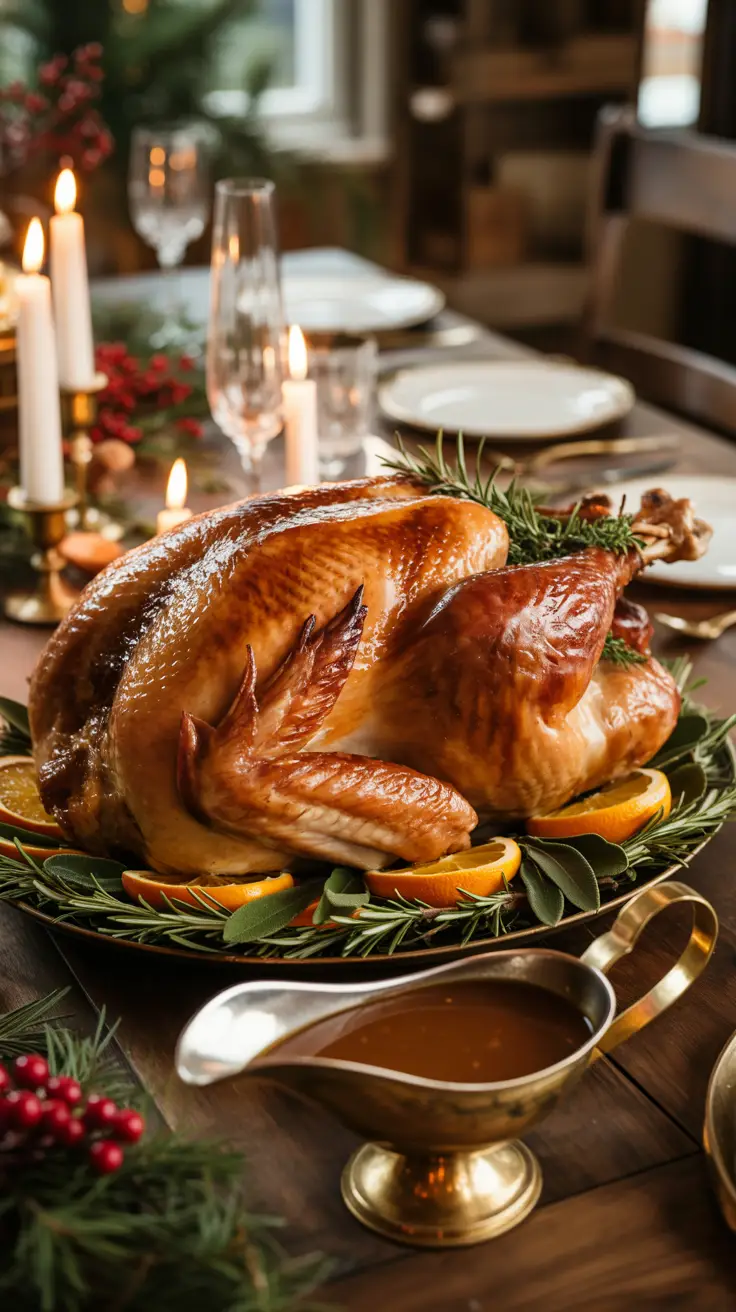
Nothing says Christmas quite like a golden, perfectly roasted turkey taking center stage on your dining table. The secret to an unforgettable turkey lies in the preparation—brining the bird overnight ensures incredibly juicy meat, while herb butter rubbed under and over the skin creates a beautifully bronzed exterior with layers of flavor. Start by mixing softened butter with fresh thyme, rosemary, sage, and minced garlic, then carefully separate the skin from the breast meat to spread this aromatic mixture directly onto the flesh. This technique guarantees that every bite bursts with herb-infused richness.
The key to stress-free turkey cooking is using a reliable meat thermometer and allowing plenty of resting time. Cook your turkey breast-side up at 325°F, basting every 45 minutes with its own drippings mixed with white wine or chicken stock. The internal temperature should reach 165°F in the thickest part of the thigh. Once done, tent with foil and let it rest for at least 30 minutes—this crucial step redistributes the juices throughout the meat, ensuring every slice is succulent. Don’t forget to save those pan drippings for rich, homemade gravy that ties the entire meal together.
Honey-Glazed Ham
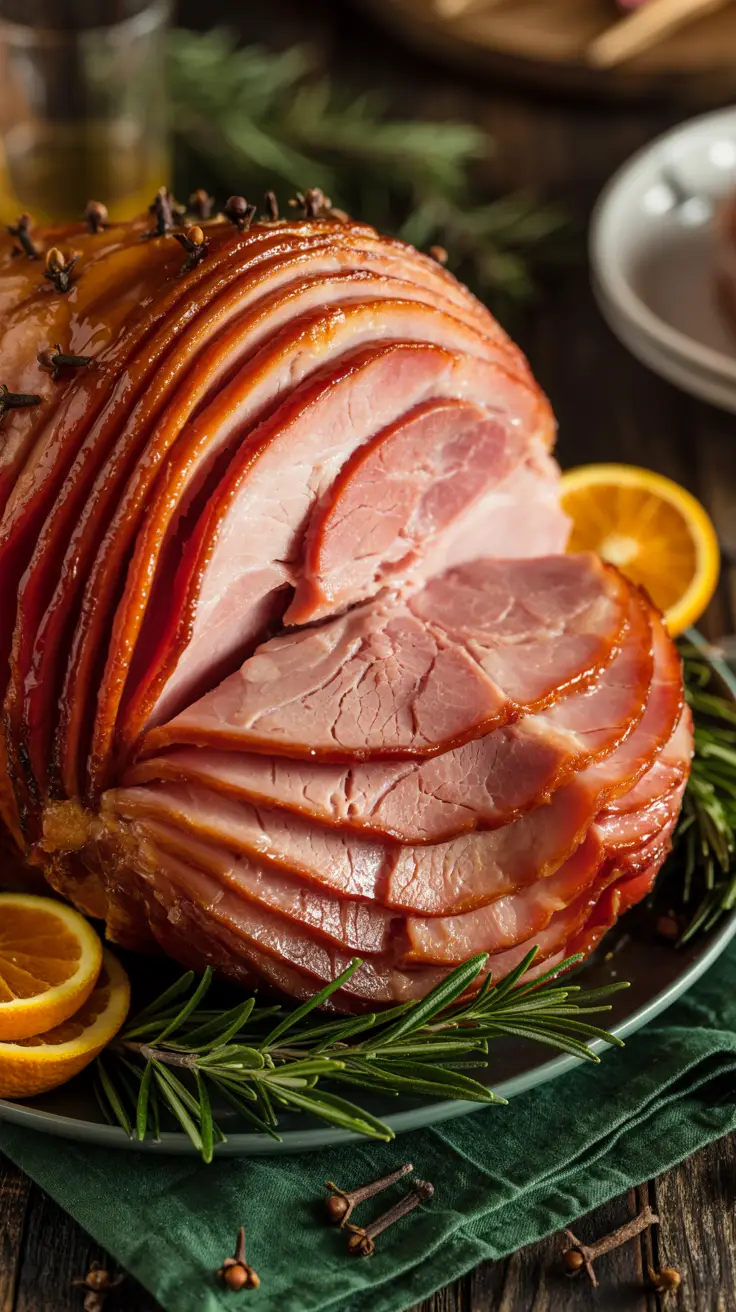
A honey-glazed ham brings sweet and savory harmony to your Christmas table with remarkably less fuss than turkey. This crowd-pleasing centerpiece requires minimal prep time yet delivers maximum impact, making it perfect for hosts who want to spend more time with family and less time in the kitchen. Start with a fully cooked spiral-cut ham, then create a glaze that combines honey, Dijon mustard, brown sugar, and a splash of bourbon or apple juice for depth. Score the ham in a diamond pattern and stud with whole cloves for traditional flavor and stunning presentation.
The glazing process transforms an ordinary ham into something truly spectacular. Apply the first layer of glaze about an hour before the ham is done, then continue basting every 15 minutes to build up beautiful, caramelized layers. The sugars in the honey and brown sugar create a gorgeous golden-brown finish that photographs beautifully and tastes even better. Leftover ham makes incredible sandwiches, soup, and breakfast hash throughout the holiday week, giving you delicious meals with minimal effort.
Prime Rib Roast with Garlic Butter
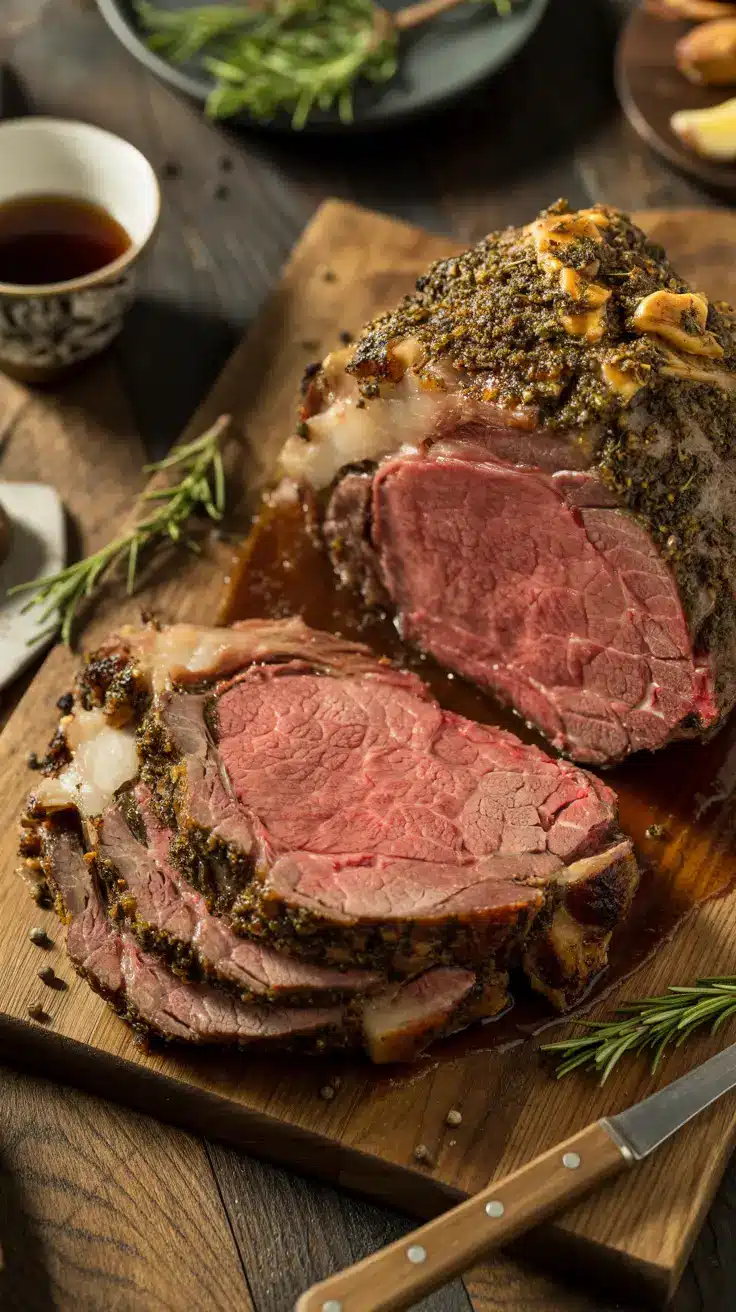
Prime rib represents the pinnacle of Christmas luxury—a show-stopping roast that commands respect and delivers unforgettable flavor. This cut requires confidence and proper timing, but the results justify every moment of anticipation. Start with a bone-in rib roast (also called standing rib roast) and let it come to room temperature for at least two hours before cooking. Create a paste with softened butter, minced garlic, fresh herbs, coarse salt, and cracked black pepper, then massage this mixture all over the meat. The fat cap will render slowly, basting the roast naturally while creating an incredibly flavorful crust.
The reverse-sear method produces restaurant-quality results at home: start the roast in a low oven (275°F) until it reaches your desired internal temperature, then finish with a high-heat blast to develop a beautiful crust. Use a meat thermometer and remember that the temperature will continue rising during the resting period. Serve with classic horseradish cream sauce and rich au jus made from the pan drippings. Each slice reveals a perfect pink center surrounded by a seasoned, golden exterior that melts in your mouth.
Herb-Crusted Beef Tenderloin
Beef tenderloin offers elegance and simplicity in one beautiful package, perfect for hosts who want to impress without spending all day in the kitchen. This premium cut cooks quickly and feeds a crowd, making it ideal for Christmas dinner when you have multiple courses to manage. The key to exceptional tenderloin lies in the herb crust—combine fresh rosemary, thyme, and parsley with garlic, Dijon mustard, and olive oil to create a paste that adheres beautifully to the meat. Sear the tenderloin in a hot skillet first to develop color, then transfer to the oven to finish cooking.
The beauty of tenderloin is its uniform cooking and quick preparation time. A 4-pound roast serves 8-10 people and cooks in about 25-30 minutes, leaving you free to focus on sides and appetizers. Let the meat rest for 10-15 minutes before slicing to ensure juicy results. Serve with a variety of sauces like béarnaise, red wine reduction, or simple pan jus to let guests customize their experience. The mild flavor of tenderloin pairs beautifully with robust sides like roasted vegetables and creamy potatoes.
Stuffed Pork Loin with Apples and Cranberries
A stuffed pork loin brings rustic charm and festive flavors together in one impressive main course. The combination of sweet apples, tart cranberries, and savory herbs creates a filling that complements pork’s natural richness while adding beautiful color when sliced. Butterfly the pork loin by cutting it horizontally, leaving about an inch attached so it opens like a book. The stuffing mixture of diced apples, dried cranberries, breadcrumbs, onions, and fresh sage gets spread across the opened meat, then rolled up and tied securely with kitchen twine.
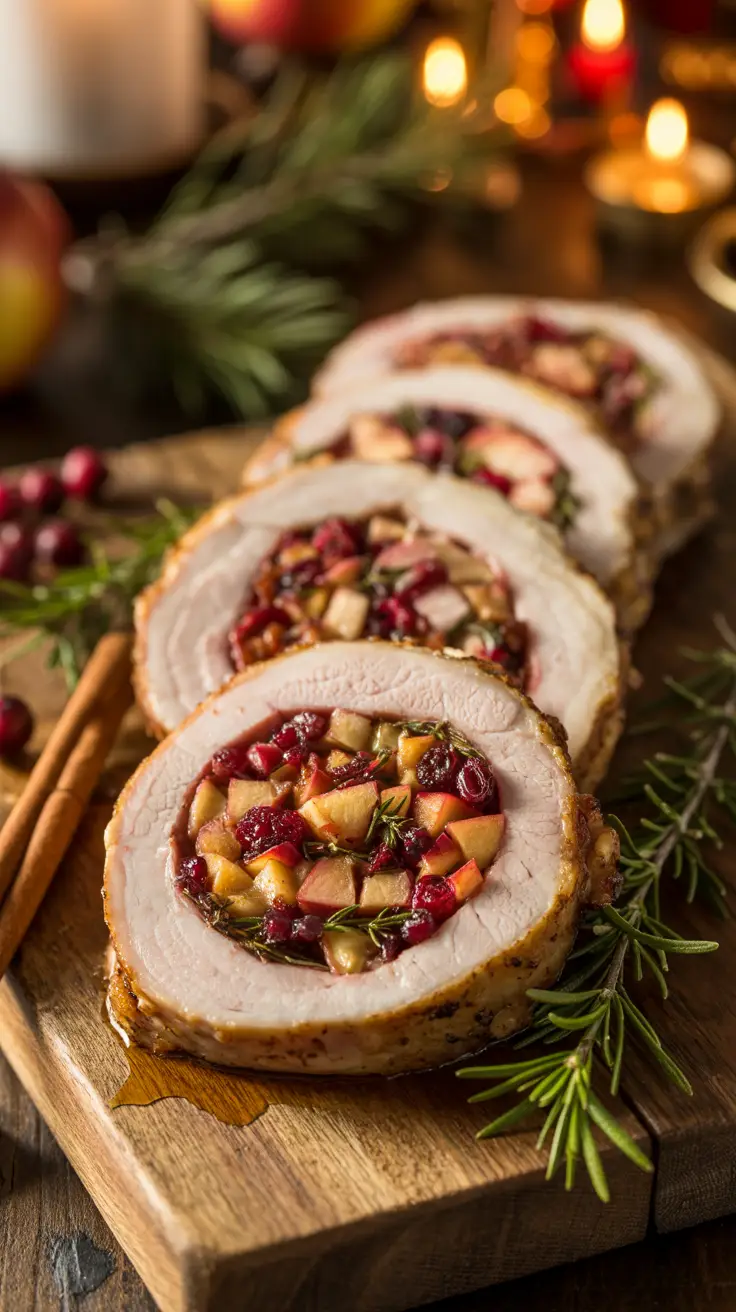
This dish offers the advantage of built-in sides—the fruit stuffing provides sweetness that might otherwise come from a separate dish, streamlining your menu. The pork stays incredibly moist thanks to the moisture from the fruit, while the exterior develops a beautiful golden crust. Start by searing all sides in a hot pan, then transfer to the oven to finish cooking. The internal temperature should reach 145°F for perfectly cooked, slightly pink pork. Let it rest before slicing to reveal the colorful spiral of stuffing in every portion.
Baked Salmon with Lemon-Dill Sauce
Salmon provides a lighter yet luxurious alternative to traditional heavy meats, perfect for families looking to balance their Christmas feast. A whole side of salmon creates stunning presentation while cooking quickly and evenly. Season the fish simply with olive oil, coarse salt, cracked pepper, and fresh lemon slices, allowing the natural flavor to shine. The key to perfectly baked salmon is high heat for a short time—425°F for 12-15 minutes depending on thickness—which creates a slightly caramelized exterior while keeping the interior moist and flaky.
The lemon-dill sauce elevates this dish from simple to spectacular. Combine crème fraîche or Greek yogurt with fresh dill, lemon zest and juice, minced garlic, and a touch of Dijon mustard for a bright, tangy accompaniment that cuts through the richness of the fish. This sauce can be made hours ahead, making your Christmas morning less hectic. Garnish the salmon with fresh dill sprigs and lemon wheels for a presentation that’s both elegant and festive. Leftover salmon makes excellent additions to holiday brunch spreads or light lunches.
Vegetarian Mushroom Wellington
A mushroom Wellington brings vegetarian elegance to your Christmas table without sacrificing any drama or flavor. This show-stopping dish layers seasoned mushroom duxelles, wilted spinach, and sometimes nuts or cheese inside golden, flaky puff pastry. The key to exceptional Wellington lies in removing moisture from the mushroom mixture—sauté finely chopped mushrooms, shallots, and garlic until all liquid has evaporated and the mixture is intensely flavored. Add fresh herbs, breadcrumbs, and seasoning to create a filling that holds together when sliced.
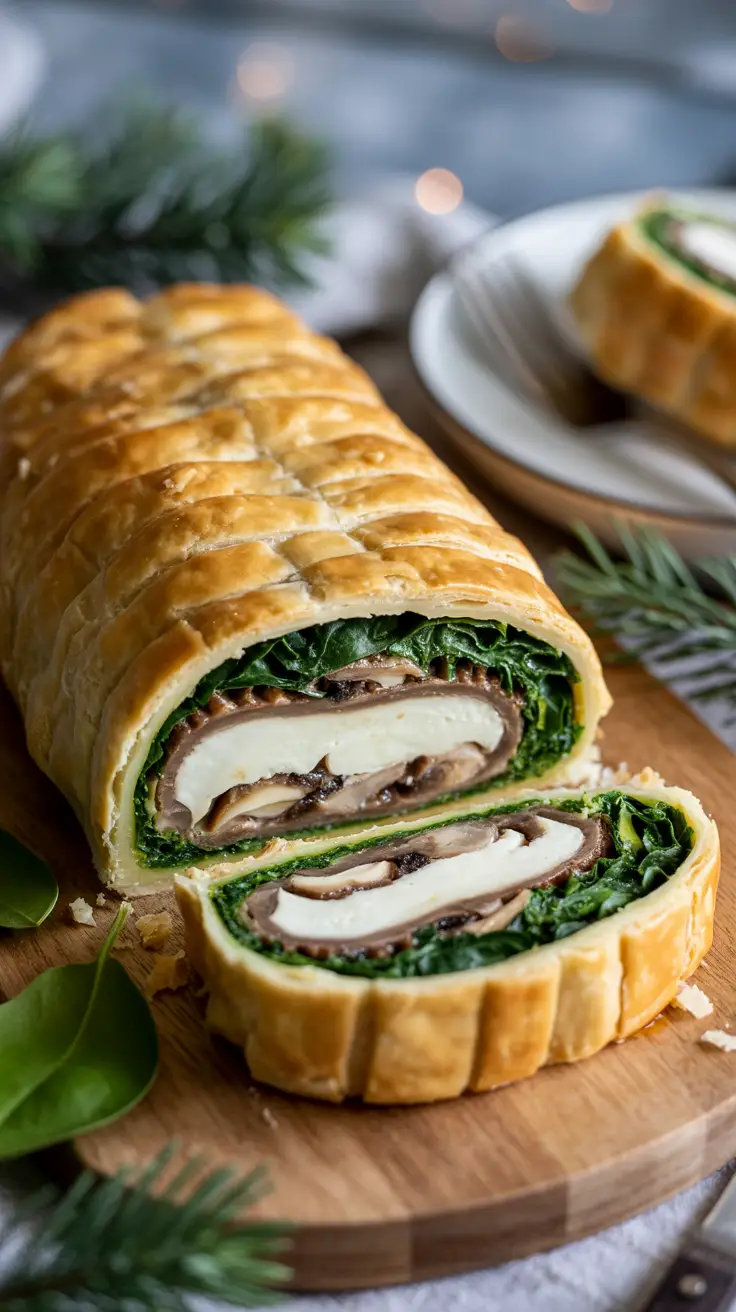
Assembly requires patience but delivers spectacular results. Roll out puff pastry, layer with the cooled mushroom mixture and any additional fillings, then wrap tightly and seal the edges. Brush with egg wash for a glossy, golden finish and score decoratively if desired. The Wellington needs to bake until the pastry is golden and the internal temperature reaches 160°F. Let it rest for 10 minutes before slicing to prevent the filling from spilling out. Each slice reveals beautiful layers and provides a hearty, satisfying main course that even meat-eaters will appreciate.
Roast Duck with Orange Glaze
Duck offers sophisticated flavors that transform your Christmas dinner into a gourmet experience. The rich, fatty meat pairs beautifully with citrus, making orange glaze a classic accompaniment that cuts through the richness while adding festive brightness. Preparing duck requires scoring the skin in a crosshatch pattern to allow fat to render properly, creating the crispy skin that makes this dish so special. Season inside and out with salt, pepper, and herbs, then roast breast-side up, pricking the skin periodically to release more fat.
The orange glaze combines fresh orange juice and zest with honey, soy sauce, and warming spices like star anise or five-spice powder. Brush this mixture over the duck during the last 30 minutes of cooking, building up lacquered layers of flavor and color. Duck takes longer to cook than chicken—allow about 20 minutes per pound—but the results are worth the wait. The rendered duck fat is liquid gold for roasting potatoes or vegetables, adding incredible flavor to your sides. Carve carefully to showcase the crispy skin and tender, flavorful meat.
Slow-Cooked Lamb Shanks
Lamb shanks represent comfort food at its finest, perfect for cold Christmas days when you want something hearty and warming. These tough cuts become incredibly tender through long, slow braising in red wine and aromatic vegetables. The process fills your kitchen with incredible aromas that build anticipation throughout the day. Start by searing the shanks in a heavy Dutch oven to develop deep color, then build layers of flavor with onions, carrots, celery, garlic, and herbs like rosemary and thyme.
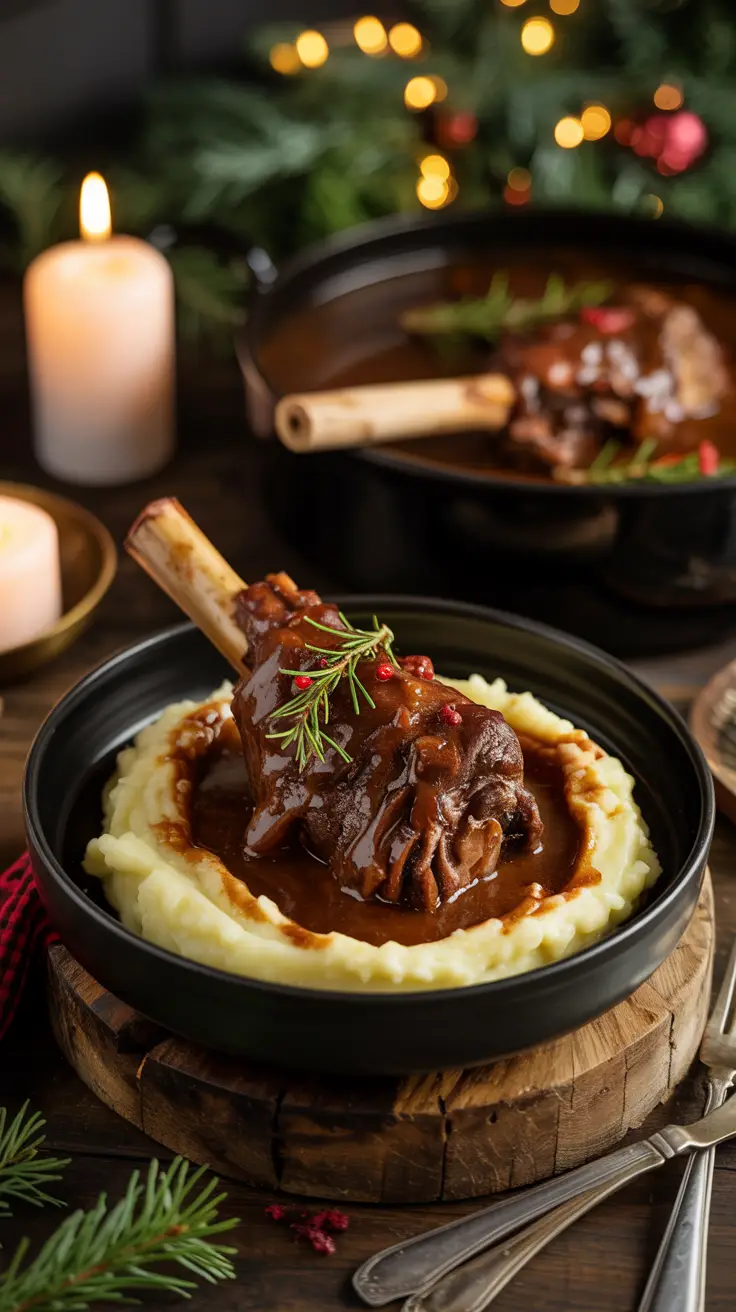
Red wine forms the braising liquid base, supplemented with beef or lamb stock and sometimes tomato paste for richness. The shanks need 2-3 hours in a low oven, during which time the tough connective tissue breaks down into gelatin, creating a rich, silky sauce. The meat should be fall-off-the-bone tender when done. Serve over creamy polenta, mashed potatoes, or with crusty bread to soak up the incredible sauce. This dish actually improves when made ahead, making it perfect for stress-free entertaining.
Side Dishes That Complete the Feast
Garlic Mashed Potatoes
Creamy, buttery mashed potatoes serve as the ultimate comfort food foundation for any Christmas plate. The secret to restaurant-quality mashed potatoes lies in choosing the right variety—russets or Yukon Gold work best—and using warm dairy products to maintain temperature and texture. Roasted garlic adds subtle sweetness and depth without overpowering the dish. Roast whole garlic bulbs until soft and caramelized, then squeeze the cloves directly into your potatoes for incredible flavor that’s more complex than raw garlic.
The technique matters as much as the ingredients: pass hot potatoes through a food mill or ricer for the smoothest texture, then fold in warm butter and cream gradually. Season generously with salt and white pepper, tasting as you go. Keep the potatoes warm in a slow cooker or warm oven, adding more cream if they thicken too much. A final garnish of fresh chives or a pat of herb butter makes these potatoes worthy of your finest Christmas china.
Sweet Potato Casserole with Pecan Crumble
Sweet potato casserole bridges the gap between side dish and dessert, bringing natural sweetness and warm spices to your Christmas table. The base combines mashed sweet potatoes with butter, eggs, vanilla, and warming spices like cinnamon and nutmeg. Some families prefer marshmallows on top, but a pecan crumble topping offers more sophisticated flavors and textures. Mix chopped pecans with brown sugar, butter, and a pinch of salt for a topping that adds delightful crunch to the creamy base.
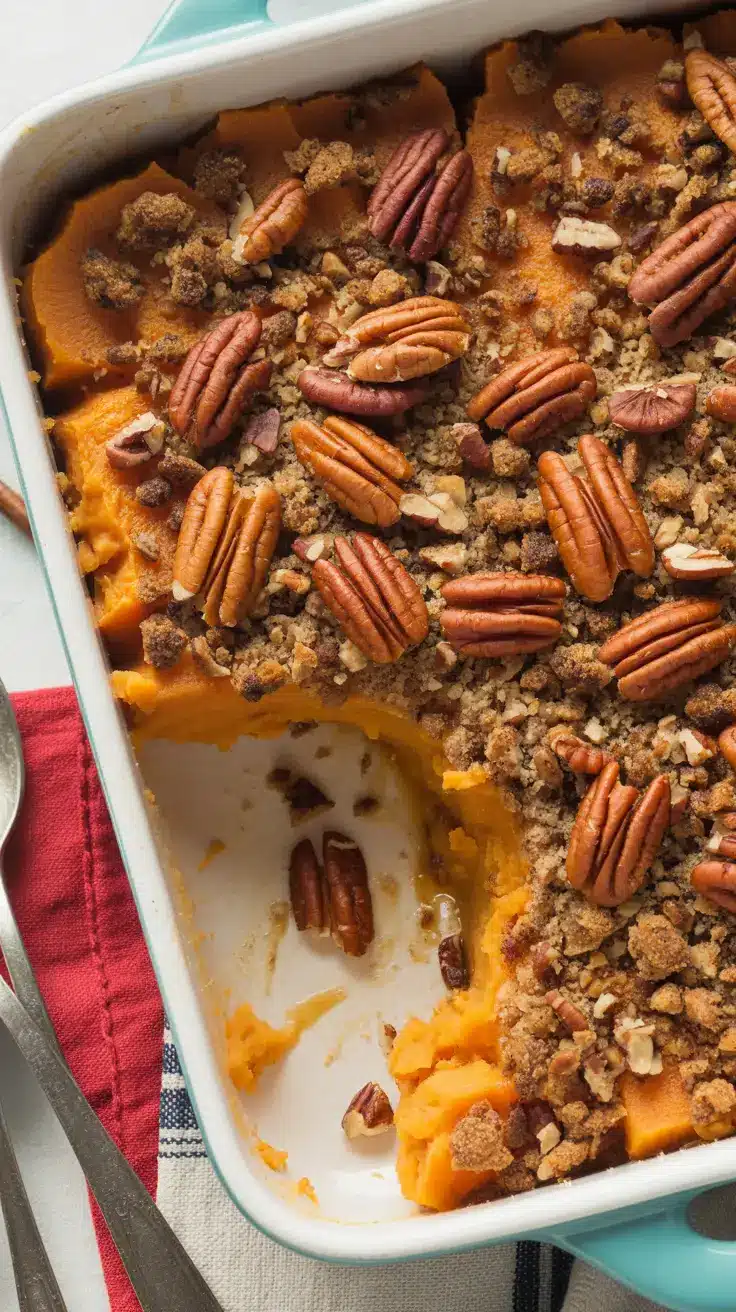
This dish can be assembled completely ahead of time, making Christmas morning less hectic. The sweet potatoes can even be roasted and mashed days in advance, then mixed with the other ingredients when ready to assemble. Bake until the top is golden and the center is heated through. The natural sweetness of the potatoes means you can reduce added sugars while still satisfying those who crave something sweet with their savory meal.
Yorkshire Pudding
Yorkshire pudding brings British tradition and impressive presentation to your Christmas table with surprisingly simple ingredients and techniques. These golden, airy popovers are made from a basic batter of flour, eggs, and milk, but the magic happens in the cooking method. The key to dramatic rise and crispy texture lies in preheating your muffin tins with a bit of oil until smoking hot before adding the batter. This creates immediate steam and lift, resulting in puddings that puff dramatically above the rim of each cup.
The batter should be smooth and rest for at least 30 minutes before baking, allowing the flour to hydrate fully. Some cooks prepare it hours ahead for even better results. Yorkshire pudding is traditionally served with roast beef and gravy, but it pairs beautifully with any rich main course. The hollow centers are perfect for filling with gravy or vegetables, while the crispy exterior provides textural contrast to softer dishes. These impressive-looking sides actually cost pennies to make and use ingredients you likely have on hand.
Cranberry Sauce with Orange Zest
Homemade cranberry sauce transforms the canned version’s one-note sweetness into a bright, complex condiment that enhances every bite of your Christmas meal. Fresh cranberries pop and burst during cooking, creating natural texture while their tartness balances rich meats and heavy sides. Orange zest and juice add citrusy brightness that makes the sauce feel fresh and vibrant rather than cloying. Some recipes include warming spices like cinnamon or ginger for additional depth.
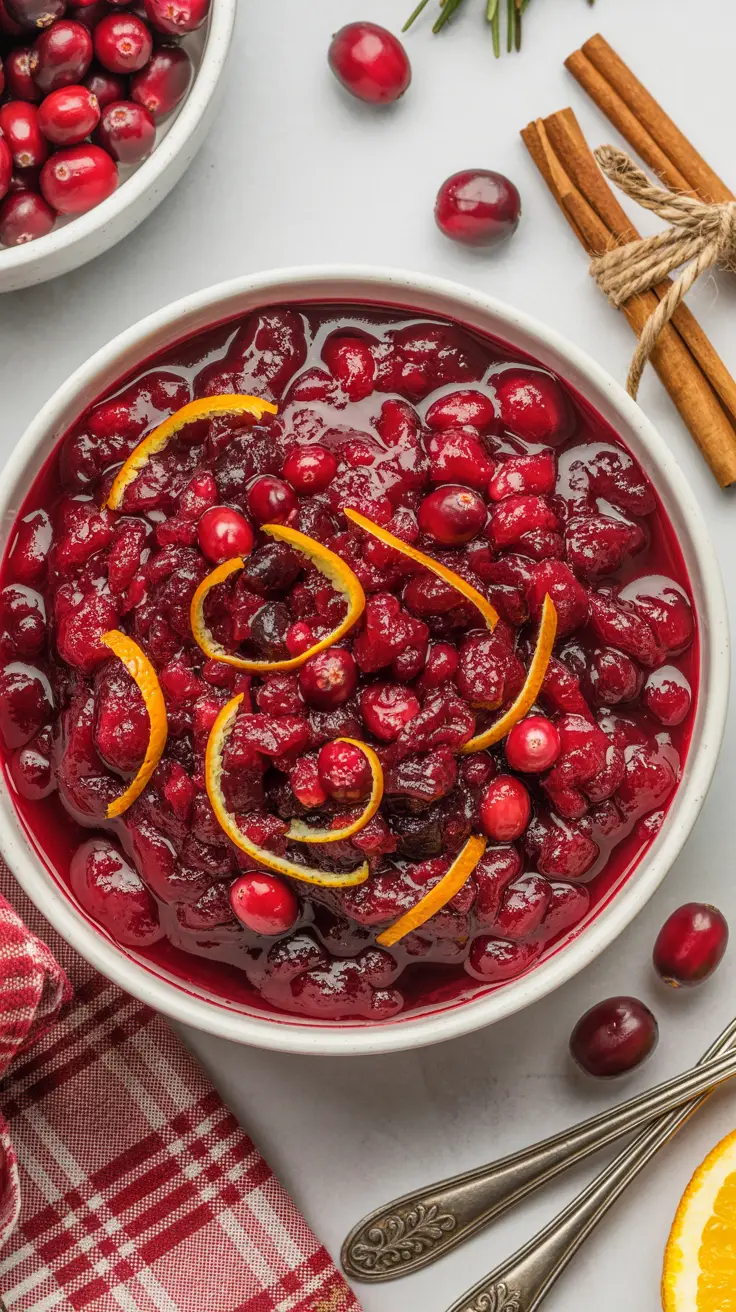
The beauty of cranberry sauce lies in its simplicity and make-ahead convenience. Combine cranberries with sugar, orange juice and zest, and perhaps a splash of water in a saucepan. Cook until the berries burst and the mixture thickens, then let it cool to room temperature. The sauce continues to thicken as it cools and can be made up to a week ahead. Serve at room temperature or slightly chilled. The bright red color adds beautiful contrast to your plate while the tart-sweet flavor cleanses the palate between richer bites.
Roasted Brussels Sprouts with Bacon
Brussels sprouts have undergone a complete image makeover, thanks largely to proper cooking techniques that bring out their sweet, nutty flavors while eliminating bitterness. Roasting at high heat caramelizes the outer leaves while keeping the centers tender, creating complex flavors and appealing textures. Cut the sprouts in half to maximize surface area for browning, and don’t overcrowd the pan—this ensures proper roasting rather than steaming. Toss with olive oil, salt, and pepper before roasting until deeply golden.
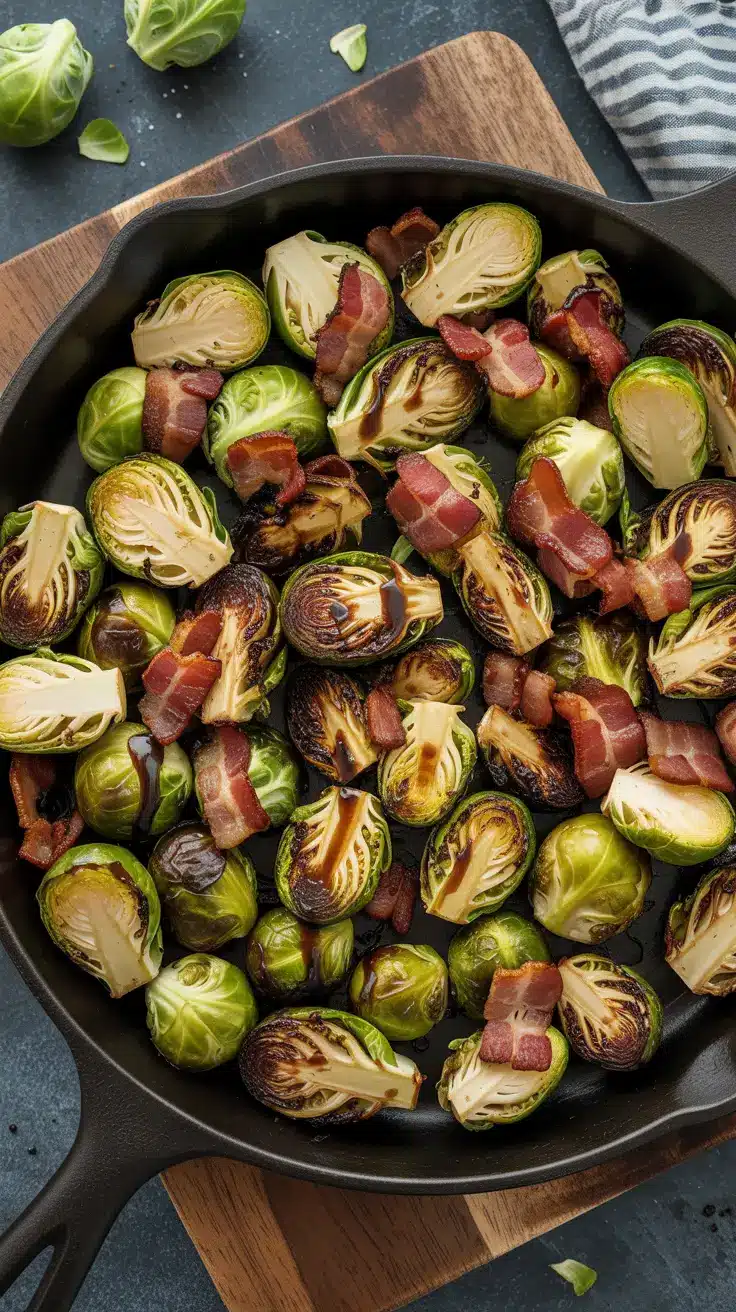
Bacon adds smoky richness that transforms Brussels sprouts from simple vegetable to crave-worthy side dish. Cook diced bacon until crispy, then remove it and roast the sprouts in the rendered fat for incredible flavor. Toss the crispy bacon back in during the last few minutes of cooking. A splash of balsamic vinegar or lemon juice brightens the finished dish and cuts through the richness. Even Brussels sprouts skeptics often become converts when they taste this preparation, making it perfect for winning over reluctant vegetable eaters at your Christmas table.
Green Bean Almondine
Green bean almondine represents classic French technique applied to humble ingredients, creating an elegant side that feels special enough for Christmas dinner. The key lies in proper blanching—cook the green beans in heavily salted boiling water just until crisp-tender, then shock them in ice water to stop the cooking and preserve their bright color. This technique can be done hours ahead, leaving only a quick sauté at serving time. Sliced almonds toasted until golden provide nutty crunch and beautiful color contrast.
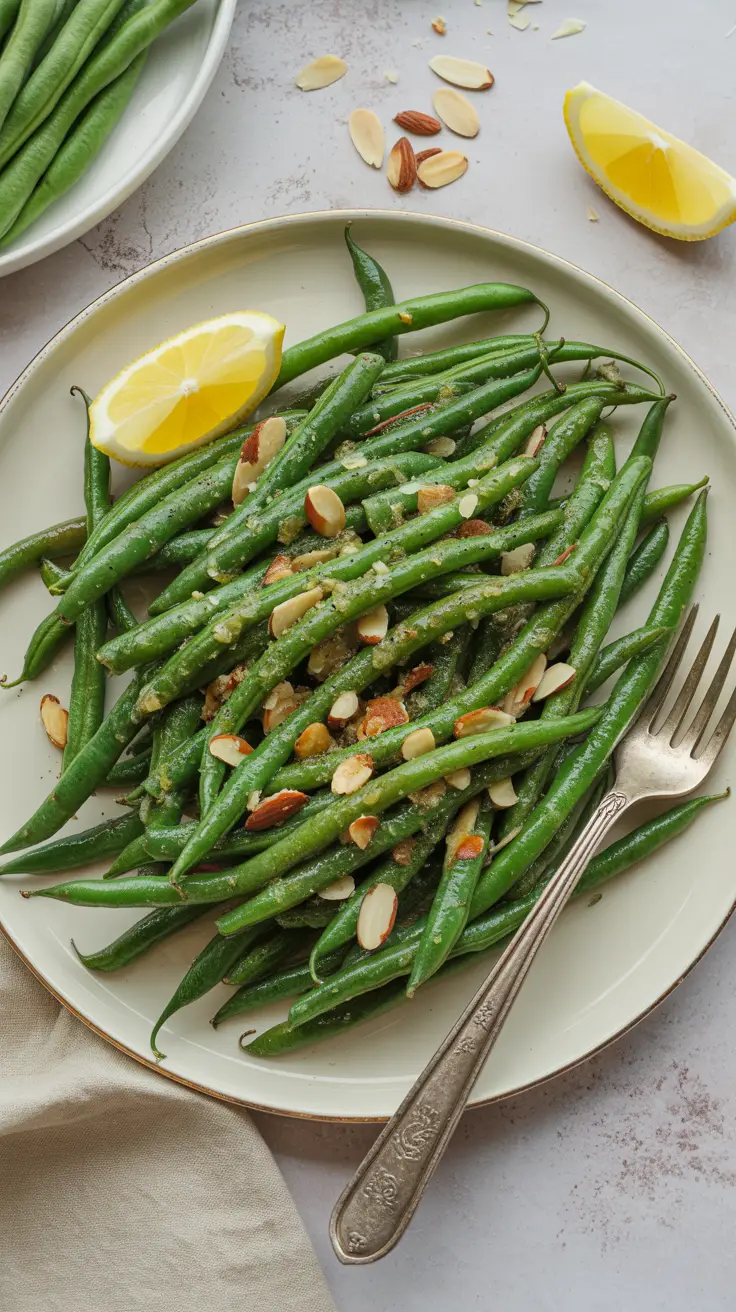
The finishing touch involves browning butter until it develops a nutty aroma and golden color, then tossing the blanched beans and toasted almonds in this fragrant fat. A squeeze of fresh lemon juice brightens the dish and balances the richness of the browned butter. The entire finishing process takes only a few minutes, making this an excellent choice when you need to coordinate multiple hot dishes. The result is a sophisticated side that looks and tastes far more complicated than it actually is, perfect for impressing Christmas guests.
Cheesy Scalloped Potatoes
Scalloped potatoes represent the ultimate in comfort food luxury—layer upon layer of thinly sliced potatoes swimming in rich, cheesy cream sauce. The key to perfect scalloped potatoes lies in choosing the right potato variety (russets work best), slicing them uniformly thin, and creating a sauce that won’t curdle during baking. A combination of heavy cream and whole milk provides richness without being too heavy, while a blend of cheeses—perhaps Gruyere and cheddar—adds complex flavor and beautiful browning.
Proper layering technique ensures even cooking and prevents dry spots. Season each layer lightly with salt and pepper, and overlap the potato slices like shingles for maximum coverage. The sauce should just barely cover the top layer—too much and the dish becomes soupy, too little and the top layer dries out. Cover with foil for most of the baking time to prevent over-browning, then remove it during the last 30 minutes to develop a golden, bubbling top. Let the dish rest for 10-15 minutes before serving to allow the layers to set properly.
Also read:
30 Festive Christmas Dinner Meal Ideas
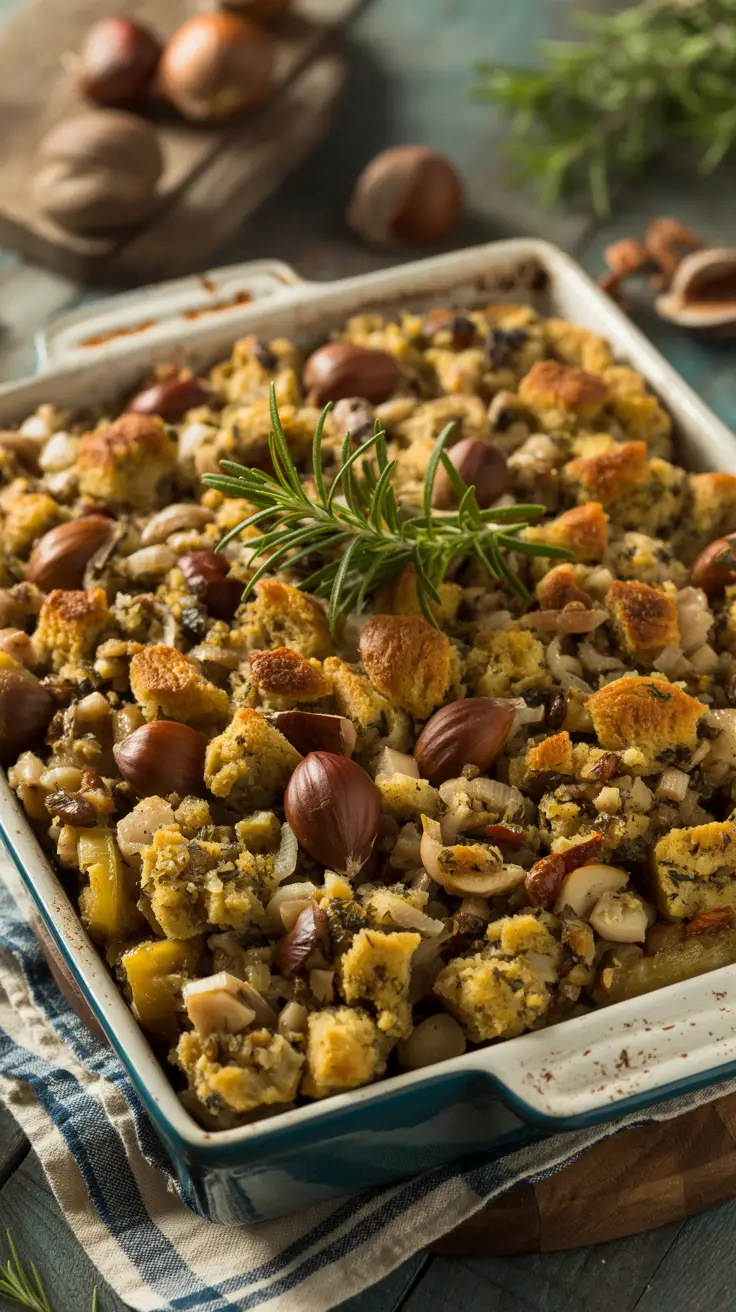
Chestnut Stuffing
Chestnut stuffing brings old-world elegance and rich, nutty flavors to your Christmas table. Fresh chestnuts require some effort to prepare—score them with an X and roast until the shells split, then peel while warm—but their sweet, meaty texture is worth the work. Vacuum-packed chestnuts offer a convenient alternative that still delivers excellent flavor. The stuffing base combines day-old bread cubes with sautéed onions, celery, and herbs like sage and thyme, creating a savory foundation for the chestnuts.
The binding liquid should be rich and flavorful—use turkey or chicken stock enhanced with butter and beaten eggs. The mixture should hold together when squeezed but not be soggy. Chestnuts add natural sweetness that complements savory herbs and aromatics without making the stuffing dessert-like. Bake until golden on top and heated through, with a slightly crispy exterior and moist interior. This sophisticated stuffing pairs beautifully with all types of roasted meats and adds textural interest to your holiday plate.
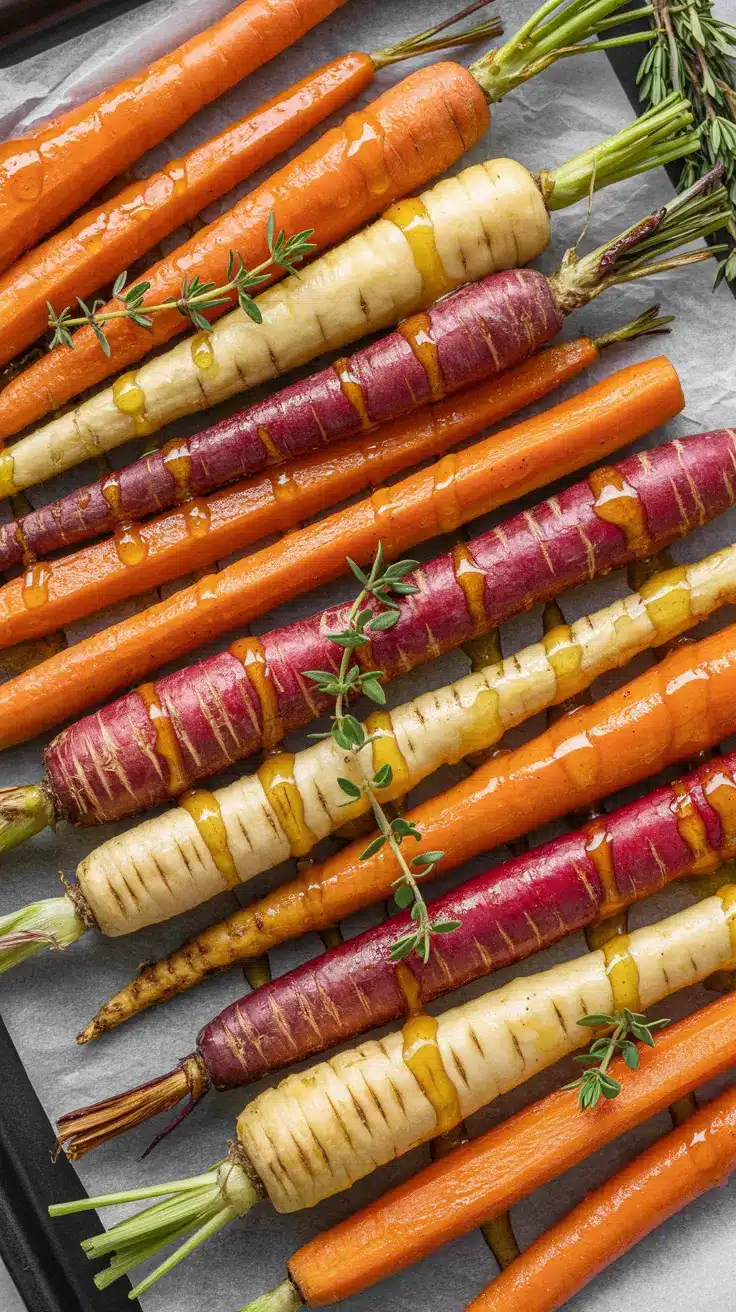
Honey-Roasted Carrots and Parsnips
Root vegetables showcase winter’s bounty while adding natural sweetness and beautiful color to your Christmas plate. Carrots and parsnips make an ideal pairing—the carrots provide sweetness and vibrant orange color, while parsnips contribute earthy complexity and pale contrast. Cut vegetables into uniform pieces for even cooking, and don’t overcrowd the pan, which would cause steaming rather than roasting. Toss with olive oil, salt, and pepper before roasting at high heat until tender and caramelized.
Honey adds glossy sweetness that complements the vegetables’ natural sugars while promoting beautiful browning. Drizzle honey over the vegetables halfway through roasting, then toss to coat evenly. Fresh herbs like thyme or rosemary add aromati
c complexity and make the dish feel more sophisticated. The vegetables should be fork-tender with golden, slightly caramelized edges when done. A final sprinkle of fresh herbs and perhaps a squeeze of lemon juice brightens the finished dish and adds a professional touch to your presentation.
Breads and Appetizers to Start Right
Pull-Apart Garlic Bread Wreath
A pull-apart garlic bread wreath serves as both appetizer and stunning centerpiece, bringing interactive fun to your Christmas table. This impressive-looking bread starts with simple ingredients—frozen dinner rolls, butter, garlic, and herbs—but the shaping technique creates something truly special. Arrange balls of dough in a bundt pan to form a wreath shape, brush with garlic butter mixture, and bake until golden. The result pulls apart into individual portions perfect for dipping in soup, mopping up gravy, or simply enjoying on their own.
The garlic butter mixture should be generous and flavorful—combine softened butter with minced fresh garlic, Italian herbs, and a pinch of red pepper flakes for subtle heat. Brush this mixture over the dough balls before baking, and again when the bread is hot from the oven for maximum flavor penetration. Garnish the finished wreath with fresh rosemary sprigs and maybe a few cherry tomatoes to mimic holiday decorations. This bread disappears quickly and creates a warm, welcoming atmosphere that encourages guests to gather around and share.
Baked Brie with Cranberry Sauce
Baked brie wrapped in puff pastry creates an elegant appetizer that looks far more complicated than it actually is. The combination of creamy, melted cheese and tart-sweet cranberry sauce provides perfect flavor balance, while the flaky pastry adds textural contrast and makes the dish feel special enough for Christmas entertaining. Choose a wheel of brie that’s ripe but still firm—it should give slightly when pressed but not be runny. Score the top rind in a crosshatch pattern to help the cheese melt evenly.
The cranberry topping can be as simple as whole berry sauce mixed with chopped pecans and fresh thyme, or more elaborate with dried cranberries, chopped apples, and warming spices. Spread this mixture over the scored brie before wrapping in puff pastry. Brush the pastry with egg wash for a beautiful golden finish and bake until the pastry is puffed and golden. Let it cool for a few minutes before serving—the cheese will be molten hot initially. Serve with crackers, sliced baguette, or apple slices for dipping.
Smoked Salmon Crostini
Smoked salmon crostini brings sophisticated flavors and elegant presentation to your appetizer spread with minimal effort required. The base starts with thinly sliced baguette toasted until golden and crispy—these can be made hours ahead and stored in an airtight container. The topping combines cream cheese or crème fraîche with fresh dill, lemon zest, and a touch of horseradish for subtle heat. High-quality smoked salmon is essential here since it’s the star ingredient, so splurge on the best you can find.
Assembly should happen close to serving time to prevent the bread from becoming soggy. Spread each toast with the cream cheese mixture, top with a piece of smoked salmon arranged attractively, and garnish with fresh dill sprigs and a small caper or two. A light squeeze of fresh lemon juice just before serving brightens all the flavors. These crostini look restaurant-quality but require no cooking skills beyond making toast. They’re perfect for cocktail hour when you want something elegant but don’t want to be stuck in the kitchen while guests arrive.
Deviled Eggs with Holiday Twist
Deviled eggs get a festive makeover that transforms this classic appetizer into something worthy of your finest Christmas china. The basic technique remains the same—perfectly hard-boiled eggs with creamy, seasoned yolk filling—but small touches add holiday flair. Start with farm-fresh eggs if possible, and use the traditional method of starting in cold water, bringing to a boil, then removing from heat and letting sit for 12 minutes before shocking in ice water. This prevents gray rings around the yolks and makes peeling easier.
The filling gets holiday treatment with additions like crispy bacon bits, fresh chives, and a sprinkle of paprika for color. Some cooks add a tiny bit of horseradish or Dijon mustard for subtle heat that complements rich holiday foods. Pipe the filling back into the egg whites using a star tip for professional presentation, then garnish with paprika, fresh herbs, or even a tiny piece of red pepper for color. These can be made a day ahead and refrigerated, making them perfect for stress-free entertaining. Arrange on a festive platter with fresh greenery for beautiful presentation.
Prosciutto-Wrapped Asparagus
Prosciutto-wrapped asparagus represents elegance in its simplest form—just two ingredients that create something greater than the sum of their parts. Choose asparagus spears that are thick enough to handle wrapping but not so thick they won’t cook through quickly. Trim the tough ends and wrap each spear with a thin slice of prosciutto, starting at the base and spiraling up toward the tip. The salt and fat in the prosciutto will season and baste the asparagus as it cooks.
These elegant appetizers can be prepared several hours ahead and refrigerated until cooking time. Simply arrange on a baking sheet and roast at high heat for 10-12 minutes, until the prosciutto is crispy and the asparagus is tender-crisp. The contrast between the salty, crispy meat and fresh, bright vegetable creates perfect balance. Arrange on a platter and serve warm or at room temperature. They’re sophisticated enough for cocktail parties but simple enough that you won’t stress about timing. A squeeze of fresh lemon juice just before serving adds brightness that ties everything together.
Desserts to End on a Sweet Note
Classic Christmas Pudding
Christmas pudding represents centuries of British holiday tradition, bringing rich flavors and ceremonial importance to your dessert course. This dense, fruit-laden dessert requires planning—traditional recipes call for making it weeks ahead to allow flavors to meld and develop complexity. The pudding contains an abundance of dried fruits, nuts, spices, and often a generous splash of brandy or rum. The mixture steams for hours, creating a dense, moist texture that’s unlike any other dessert.
The traditional serving includes flaming the pudding with warmed brandy, creating dramatic presentation that brings families together around the table. Serve with brandy butter, custard, or heavy cream to balance the rich, intense flavors. Many families hide coins or small trinkets in the pudding for luck, adding an element of fun and tradition to the dessert course. Even if you’re not British, Christmas pudding adds international flair and sophisticated flavors that provide a memorable end to your feast.
Yule Log Cake (Bûche de Noël)
A Yule log cake brings French elegance and dramatic presentation to your Christmas dessert table. This show-stopping dessert consists of light sponge cake rolled around rich filling, then decorated to resemble a log complete with bark texture and maybe some meringue mushrooms. The cake base is typically a génoise or chiffon cake that stays flexible when rolled—the key is rolling it while still warm to prevent cracking. Dust with powdered sugar before rolling to prevent sticking.
Fillings can range from simple whipped cream to elaborate buttercream, chocolate mousse, or even ice cream for a frozen version. The exterior gets covered with chocolate buttercream that’s textured with a fork to resemble tree bark. Dust with powdered sugar to mimic snow, and add marzipan holly leaves or meringue mushrooms for realistic details. The cake can be assembled a day ahead, actually improving as flavors meld. Slice carefully with a sharp knife, wiping the blade between cuts to maintain clean presentation. Each slice reveals the beautiful spiral pattern that makes this dessert so special.
Gingerbread Cheesecake
Gingerbread cheesecake combines beloved holiday spices with rich, creamy texture for a dessert that feels both familiar and special. The graham cracker crust gets enhanced with ground ginger and cinnamon for extra spice, while the filling incorporates molasses, ginger, cinnamon, nutmeg, and cloves—all the warm spices that make gingerbread so appealing. The key to perfect cheesecake lies in gentle mixing to prevent cracks and careful baking in a water bath for even cooking.
Room temperature ingredients blend more easily and create smoother filling, so plan ahead to take cream cheese and eggs out of the refrigerator several hours before mixing. Bake until the center is almost set but still slightly jiggly—it will continue cooking from residual heat. Cool gradually to prevent cracks, first at room temperature, then in the refrigerator overnight. A simple glaze made with powdered sugar and milk, or a dollop of whipped cream garnished with candied ginger, provides the perfect finishing touch to this sophisticated holiday dessert.
Peppermint Chocolate Trifle
A peppermint chocolate trifle delivers impressive presentation with surprisingly simple assembly, making it perfect for busy hosts who want a stunning dessert without extensive baking. This dessert builds layers of chocolate brownie or cake, peppermint-flavored whipped cream or pudding, and crushed candy canes or peppermint candies in a clear glass bowl that showcases the beautiful layers. The key to successful trifle lies in having all components completely cooled before assembly to prevent melting and maintain distinct layers.
The chocolate base can be brownies, chocolate cake, or even store-bought pound cake brushed with chocolate syrup. The peppermint cream combines whipped cream or pudding with peppermint extract—start with a small amount and taste, as peppermint can quickly become overpowering. Layer components in alternating patterns, ending with cream and a generous sprinkling of crushed candy canes for beautiful red and white color contrast. Trifle actually improves when made a day ahead, allowing flavors to meld while maintaining textural contrast. Serve in individual glasses for elegant presentation or from one large bowl for family-style sharing.
Creating Your Perfect Christmas Menu
Planning your Christmas meal becomes much easier when you consider cooking times, oven space, and your guests’ preferences alongside these delicious options. Start by choosing your main course, then select sides that complement its flavors while providing variety in textures and colors. Consider dishes that can be prepared ahead of time to reduce stress on Christmas Day, and don’t be afraid to ask guests to contribute a favorite dish or family recipe.
The most memorable Christmas meals combine tradition with personal touches, creating new memories while honoring old ones. Whether you stick with classic turkey and all the trimmings or venture into new territory with duck or vegetarian Wellington, the key lies in choosing recipes you feel confident executing and ingredients that bring your family joy. After all, the best Christmas meal is one shared with people you love, regardless of what’s on the plates.