

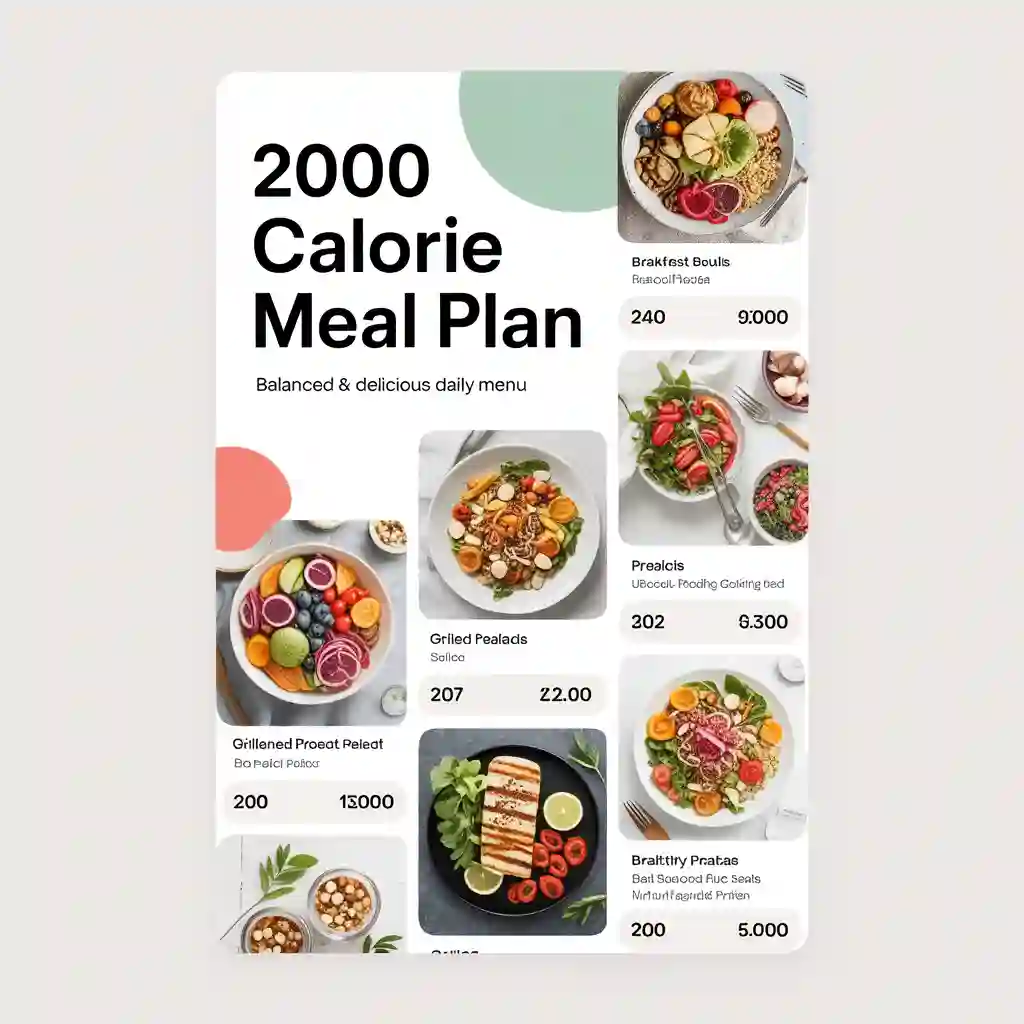
We see the number “2,000” everywhere. It is plastered on nutrition labels on the back of our favorite snacks. It appears on restaurant menus next to the burger and fries. It is the standard reference point for daily intake used by the FDA.
But knowing the number and visualizing the food are two very different things.
For many people, 2,000 calories represents a perfect maintenance level. It is often the sweet spot for moderately active women or average men looking to hold their current weight. For others, it might be a slight deficit for weight loss or a starting point for building lean muscle.
Regardless of your specific goal, hitting this number shouldn’t mean eating boring, tasteless food.
It also shouldn’t mean eating empty calories that leave you hungry an hour later.
This guide will break down exactly how to construct a 2,000-calorie day. We will explore nutrient-dense options, flexible meal structures, and practical tips to make healthy eating feel effortless.
Is 2,000 Calories the Right Target for You?
Before you start chopping vegetables or weighing chicken, it is crucial to determine if this is actually your magic number. Nutrition is highly individual. What works for your gym partner might be too much or too little for you.
Your ideal caloric intake depends on several variables. These include your age, gender, current weight, height, and activity level.
A sedentary office worker will burn significantly fewer calories than a construction worker or a marathon runner.
If you are a moderately active woman, 2,000 calories is likely a great target for maintenance. If you are a man with a sedentary job, this might also be your maintenance level.
However, if you are highly active, you might need more to sustain your performance. Conversely, if you are looking to lose weight rapidly, you might need slightly less.
The best approach is to view 2,000 calories as a baseline. Try it for two weeks. Monitor your energy levels, your sleep quality, and the scale.
If you feel great and your weight is stable, you have found your maintenance. If you are losing weight, you are in a deficit. If the scale goes up, you are in a surplus. Adjust accordingly based on your personal data.
The Building Blocks: Macros Matter More Than Math
You could technically eat 2,000 calories worth of sugary soda and potato chips every day. You would hit your numerical target, but your body would feel terrible.
Quality counts just as much as quantity.
To feel satiated and energetic, you need to focus on macronutrients: protein, carbohydrates, and fats. A balanced approach ensures your body gets the fuel it needs for repair and energy.
Aim to prioritize protein in every meal. Protein is the most satiating nutrient. It helps repair muscle tissue after exercise and keeps you feeling fuller for longer. Good sources include lean meats, eggs, dairy, tofu, and legumes.
Don’t fear carbohydrates. They are your body’s preferred energy source. Focus on complex carbs like oats, quinoa, brown rice, and sweet potatoes. These digest slowly and provide sustained energy rather than a quick spike and crash.
Finally, include healthy fats. Fats are essential for hormone health and brain function. Avocados, nuts, seeds, and olive oil add flavor and satisfaction to your meals.
A common, effective split for a 2,000-calorie diet is 40% carbohydrates, 30% protein, and 30% fat. However, you can tweak these ratios to see what makes you feel your best.
Breakfast Ideas to Jumpstart Your Metabolism
They say breakfast is the most important meal of the day, and for good reason. A solid breakfast sets the tone for your energy levels and your appetite control.
If you start the day with a sugary pastry, you will likely crash by mid-morning. This usually leads to mindless snacking before lunch.
Instead, aim for a breakfast that sits between 400 and 500 calories. This provides a substantial fuel source to get you through your morning tasks.
Oatmeal is a classic for a reason. But plain oats can be boring. Try a “Proats” (protein oats) bowl. Cook half a cup of rolled oats. Stir in a scoop of vanilla whey protein powder. Top it with a tablespoon of almond butter and a handful of berries. This gives you fiber, protein, and healthy fats all in one bowl.
If you prefer savory options, eggs are your best friend. Make a veggie-packed omelet with three eggs, spinach, peppers, and onions. Serve it with a slice of whole-grain toast.
Another great option is Greek yogurt. Choose plain, non-fat Greek yogurt for a high-protein base. Add chia seeds, granola, and sliced banana. It feels like a treat but fuels you like a champion.
Power Lunches That Prevent the Afternoon Slump
Lunch is the meal that often goes wrong. We get busy at work. We forget to pack food. We end up grabbing fast food or a heavy sandwich that makes us want to nap at 2:00 PM.
The goal for lunch is sustained energy. You want a meal that is filling but not heavy. Like breakfast, aim for roughly 500 calories here.
Salads are great, but they need to be substantial. A bowl of lettuce won’t cut it. Build a “Power Bowl.” Start with a base of leafy greens. Add half a cup of quinoa or brown rice for complex carbs.
Top this with a lean protein source like grilled chicken breast, canned tuna, or chickpeas. Then, load up on colorful veggies like cucumbers, tomatoes, and carrots.
The dressing is where calories can sneak up on you. Instead of creamy ranch, opt for a vinaigrette made with olive oil and lemon juice.
Wraps are another convenient option. Use a whole-wheat tortilla. Fill it with turkey slices, hummus, avocado, and spinach. Pair it with an apple or a side of baby carrots for extra volume.
If you have access to a microwave, leftovers are often the best lunch. Making an extra portion of your healthy dinner from the night before saves time and money.
Satisfying Dinners for Recovery and Rest
Dinner is your time to unwind. It is also an opportunity to refuel your body after the day’s activities and prepare it for overnight recovery.
Many people make the mistake of “saving” all their calories for dinner. This often leads to overeating and poor digestion before bed.
Ideally, your dinner should be similar in size to your lunch—around 500 to 600 calories. This leaves room for snacks throughout the day.
Lean beef or steak can fit perfectly into a 2,000-calorie plan. Try a stir-fry with sirloin strips, broccoli, snap peas, and bell peppers. Serve it over a small portion of white or brown rice. The high protein content supports muscle repair while you sleep.
Salmon is another nutritional powerhouse. Bake a salmon fillet with lemon and dill. Serve it alongside roasted asparagus and a baked sweet potato. The omega-3 fatty acids in the salmon are excellent for heart health and reducing inflammation.
If you want something comforting, try a turkey chili. Use lean ground turkey, kidney beans, black beans, diced tomatoes, and plenty of spices. It is warm, filling, and packed with fiber.
Remember to watch your portion sizes with pasta and rice. It is easy to accidentally eat three servings. Measuring your grains can keep you on track without needing to cut them out completely.
Smart Snacking to Bridge the Hunger Gaps
Snacking has a bad reputation. People often associate it with chips, candy, and weight gain. But when done correctly, snacking is a helpful tool.
Strategic snacks prevent you from getting ravenous between meals. When you get too hungry, you are more likely to make poor choices and overeat at your next meal.
You have about 400 to 500 calories left in your budget after your main meals. You can split this into two substantial snacks or three smaller ones.
Focus on whole foods. An apple with a tablespoon of peanut butter is a perfect combination of fiber and fat. It takes a while to eat and keeps blood sugar stable.
Hard-boiled eggs are portable protein bombs. Prepare a few at the start of the week. Sprinkle them with a little salt and pepper for a quick 70-calorie boost.
Cottage cheese is an underrated snack. It is incredibly high in casein protein, which digests slowly. This makes it a great pre-bedtime snack to keep muscles fueled overnight. Pair it with pineapple or savory cucumbers.
Protein shakes are also convenient if you are on the go. Just be mindful of the sugar content in pre-made bottles. Mixing your own powder with water or almond milk is usually the cleaner option.
Meal Prep Strategies for Consistent Success
Knowing what to eat is only half the battle. The real challenge is consistency. This is where meal prepping becomes your secret weapon.
You do not need to spend your entire Sunday in the kitchen. Even a little bit of preparation goes a long way.
Start by planning your menu for the week. Write down exactly what you need. Never go to the grocery store without a list. This prevents impulse buys that don’t fit your 2,000-calorie goal.
Cook your proteins in batch. Bake a tray of chicken breasts or roast a large portion of tofu. Having protein ready to eat makes assembling lunches and dinners takes minutes instead of hours.
Pre-chop your vegetables. Wash and cut peppers, carrots, and celery as soon as you get home from the store. Store them in clear containers at eye level in the fridge. You are much more likely to grab healthy snacks if they are ready to eat.
Portion out your snacks. Buy nuts or pretzels in bulk, but immediately bag them into single-serving sizes. It is very difficult to stop at one serving when you are eating straight from the big bag.
Invest in good-quality food storage containers. Glass containers are great because they don’t stain and can go straight into the microwave.
Also Read:
500 Calorie Meals Ideas
1500 Calorie Meals Ideas
Your Journey to Better Health Starts Now
Adopting a 2,000-calorie meal plan is about more than just hitting a number. It is about learning how to fuel your body efficiently. It teaches you portion control and macronutrient balance.
Remember that perfection is not the goal. There will be days when you eat more, and days when you eat less. There will be birthday parties and social dinners where calorie counting feels impossible.
That is okay.
The objective is consistency over the long term. By focusing on nutrient-dense whole foods—lean proteins, complex carbs, healthy fats, and plenty of vegetables—you can enjoy a diet that supports your energy and your health.
Listen to your body. Adjust your intake as your activity levels change. Use this guide as a flexible framework, not a rigid cage.
Eating well should be enjoyable. Experiment with recipes. Find the foods that make you feel vibrant. You are building a lifestyle, not just following a diet.